
Amazing New Face Blog

Side-Profile Assessment in Thornhill: When Chin Filler May or May Not Fit the Goal
Hits: 77
Your side profile can make you notice the chin more than you do from the front, but noticing it does not automatically mean filler is the right answer. A chin filler consultation in Thornhill should begin by asking what you want to change, how that goal relates to your facial proportions, and whether filler can reasonably address it without creating an over-treated look.
The useful question is not simply, “Can filler be added?” It is, “Would changing chin projection, shape, or balance actually support my goal?” The answer can depend on anatomy, skin and soft-tissue characteristics, previous treatment, expectations, and how the chin relates to the rest of the face.
Table of Contents
- At a Glance – Key Takeaways
- Why Does a Side-Profile Assessment Matter?
- What Should a Chin Filler Consultation in Thornhill Assess?
- When Might Chin Filler Fit the Goal?
- When Might Chin Filler Not Be Enough?
- What Can Change the Treatment Plan?
- What Questions Should You Bring to a Consultation?
- Frequently Asked Questions
- Summary
- About Amazing New Face
At a Glance – Key Takeaways
- A chin decision should be based on the whole profile, not the chin in isolation.
- Filler may be considered when a temporary, non-surgical change in contour or projection matches the person's goal and anatomy.
- More filler is not automatically a better plan; conservative planning can help avoid an over-treated appearance.
- Skin quality, soft-tissue support, facial structure, previous filler, and health history can affect planning.
- Filler cannot address every side-profile concern, and another approach, or no treatment, may sometimes fit better.
- A consultation should cover realistic limits, potential risks, aftercare questions, and reasons not to proceed.
Why Does a Side-Profile Assessment Matter?
A side-profile assessment matters because the chin works visually with the lips, nose, jawline, lower face, and overall facial proportions. Looking only at the chin can lead to a plan that adds volume without addressing the concern that brought the person in. A balanced assessment starts with the relationship between features rather than a single measurement or trend.
Two people may both feel that their chin looks “small” in photos, yet one may be focused on forward projection while another is noticing contour or the transition into the jawline. Facial proportions are therefore more useful than a one-size-fits-all idea of an “ideal” profile.
A consultation can compare what the person sees, what they want to preserve, and what degree of change would be meaningful without becoming dominant.
For a separate procedural overview, readers can review Amazing New Face’s educational guide to how chin filler works. This article takes a different approach by focusing on whether filler fits the goal in the first place.
What Should a Chin Filler Consultation in Thornhill Assess?
A chin filler consultation in Thornhill should assess the goal, the profile from more than one angle, facial proportions, skin and soft-tissue characteristics, previous treatments, and relevant health history. It should also clarify what filler may change, what it cannot reliably change, and whether a conservative plan is appropriate before any treatment decision is made.
“I want a stronger chin” is still broad. Does that mean slightly more forward projection, a smoother lower-face transition, or a change mainly visible in profile? Defining the goal helps keep filler treatment planning specific rather than assuming more volume is the answer.
Previous filler or other procedures in the area should also be discussed. Medication and medical-history questions should be reviewed with an appropriately qualified clinician rather than changed based on general online advice.
Local readers can also review the Amazing New Face Thornhill clinic page before arranging an assessment.
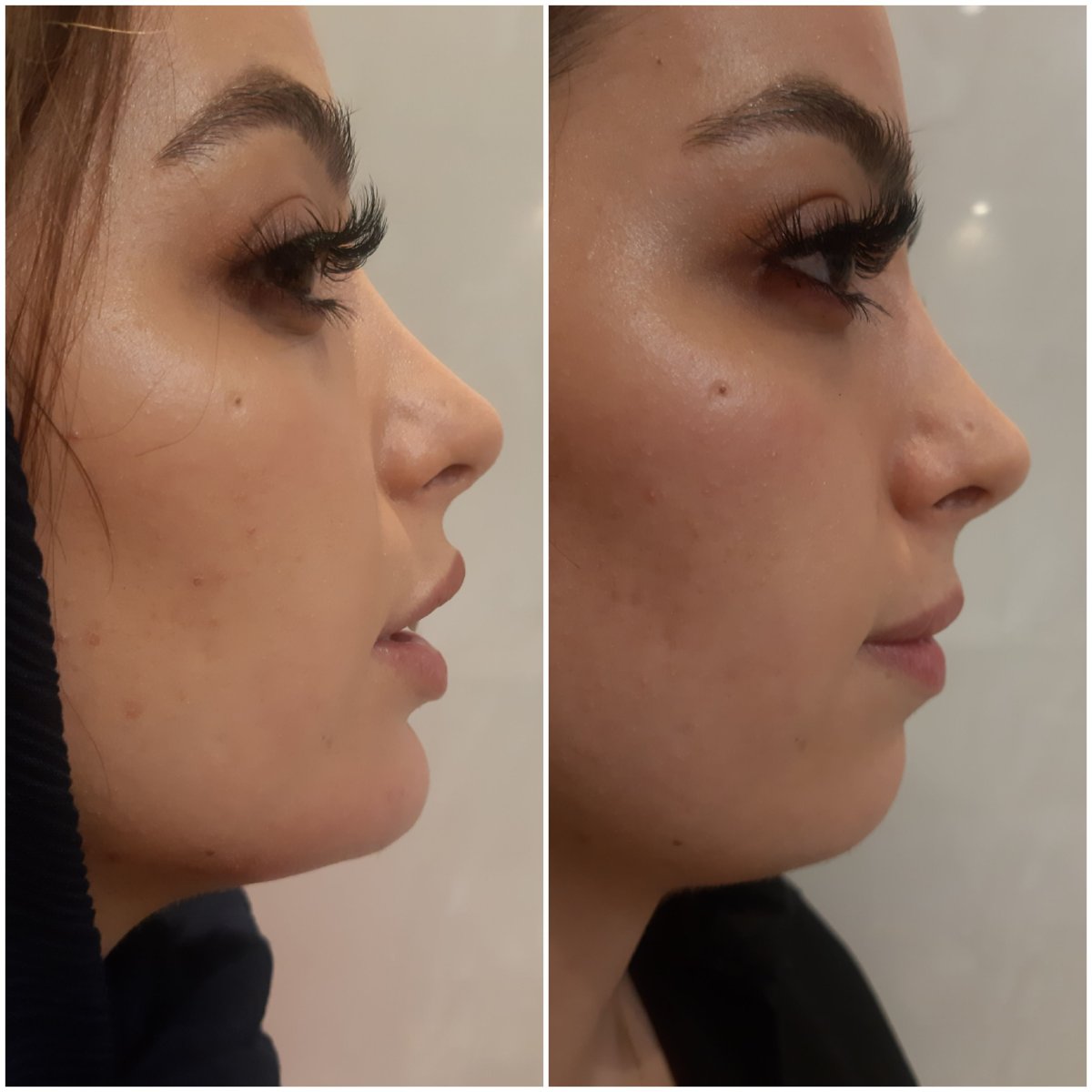
When Might Chin Filler Fit the Goal?
Chin filler may fit the goal when the desired change is modest, the person prefers a non-surgical option, and an assessment suggests that adjusting chin contour or projection could support the overall profile. Suitability is individual, so the decision should come from treatment planning rather than from a photo, a social-media trend, or someone else’s result.
Conservative planning matters because the largest visible change is not always the most appropriate one. The better question may be how much change is needed to support facial balance while preserving the person’s existing features.
People looking for natural-looking filler are often really asking about restraint: Will the plan still look like me? That cannot be guaranteed in advance, but an aesthetic consultation can discuss the intended degree of change, what may feel excessive for the person’s goal, and whether the request can reasonably be approached conservatively.
Readers can review the clinic’s chin correction options in Thornhill before consultation, while keeping in mind that a website cannot determine individual suitability.
When Might Chin Filler Not Be Enough?
Chin filler may not be enough when the concern depends on factors that added volume cannot adequately address, when the requested change is larger than a conservative injectable plan can reasonably provide, or when anatomy, treatment history, or expectations point toward a different discussion. Sometimes the appropriate outcome of consultation is not proceeding with filler.
Filler changes soft-tissue contour; it does not create the same structural effect for every person and should not be treated as a universal substitute for other approaches.
A concern may also come from the relationship between several features rather than the chin alone. If reaching the requested outcome would mean repeatedly adding volume simply to chase balance, the plan may no longer fit the original goal.
A useful consultation should therefore allow for “not now,” “not with filler,” or “not to that degree.” That is part of realistic treatment planning rather than a failure to provide treatment.
What Can Change the Treatment Plan?
The treatment plan can change based on facial anatomy, skin and soft-tissue characteristics, asymmetry, previous filler or procedures, relevant health history, and the scale of the requested change. These factors can affect whether filler is considered, how conservative the plan should be, and which limitations or trade-offs need to be discussed beforehand.
Facial anatomy matters because injectable fillers are placed in areas containing blood vessels and other structures. Health Canada guidance for dermal filler labelling identifies intravascular injection as a potential complication and emphasizes informing patients about possible adverse events. Peer-reviewed literature also stresses the importance of detailed facial-anatomy knowledge when planning filler procedures.
Questions should therefore go beyond appearance. Ask which risks are relevant to the proposed area, what aftercare issues should be discussed, and what changes after treatment should prompt contact with the treating clinic or an appropriate healthcare professional.
“Non-surgical” does not mean risk-free.
If you have had previous filler, bring accurate information about what was used and when if available. Do not guess; share what you know and let the provider determine whether further information is needed.
What Questions Should You Bring to a Consultation?
Bring questions that test the plan, not just the procedure. Ask what feature is being assessed, what change is realistically achievable, what could make the provider recommend less treatment or no treatment, what risks and aftercare points matter, and how the plan would preserve facial balance rather than simply add more volume.
Useful questions include:
- What do you see in my side profile that is relevant to the goal I described?
- What part of my goal may not be achievable with chin filler?
- Would you recommend a conservative change, a different approach, or no treatment?
- How might my skin, soft tissue, facial structure, or previous treatment affect planning?
- What risks should I understand for this area?
- What filler aftercare questions should be answered before I decide?
- What changes afterward would mean I should contact the clinic or seek medical attention?
A good consultation should leave you with a clearer decision, even if that decision is to wait. The purpose is informed choice, not pressure to proceed.
Request Consultation
If you are considering chin filler and want an in-person discussion of your side profile, goals, and treatment limitations, you can Request Consultation with Amazing New Face.
The assessment should be used to understand your individual situation rather than to assume that filler is automatically the right option.
Frequently Asked Questions
Can chin filler improve every side profile?
No. Chin filler may change contour or projection in selected cases, but not every side-profile concern is mainly a chin-volume issue. Facial proportions, skin and soft tissue, structural anatomy, previous treatment, and the scale of the desired change can all affect whether filler is a reasonable option. An individual assessment is needed before deciding.
How do I know whether I need more projection or a different type of change?
You usually cannot determine that reliably from one selfie or side-view photo. A consultation can compare several views, discuss what you actually notice, and assess how the chin relates to nearby features. The goal is not to fit an ideal profile but to understand which change, if any, matches your priorities.
Does a natural-looking result simply mean using less filler?
Not necessarily. Using less product may be part of a conservative approach, but a natural-looking result depends on proportion, placement, anatomy, and the intended change—not volume alone. The more useful discussion is whether the proposed plan respects your existing features and whether the degree of change fits your stated goal.
Is chin filler risk-free because it is non-surgical?
No. non-surgical does not mean risk-free. Dermal fillers can cause adverse events, and Health Canada guidance specifically recognizes potential complications associated with injection into blood vessels. A consultation should explain the risks relevant to the proposed treatment and what to do if you have concerns afterward.
What should I tell the provider about previous filler?
Share whatever accurate information you have, including the treatment area, approximate timing, and product information if available. Previous filler or procedures may affect assessment and planning. If you are unsure about a detail, say so rather than guessing; the provider can determine what further information is needed before making a treatment decision.
What if the provider says chin filler is not the right option for me?
That can be a useful outcome. A consultation should identify when filler is unlikely to meet the goal, when the requested change is beyond a conservative injectable plan, or when another discussion is more appropriate. Choosing not to proceed can be part of responsible aesthetic decision-making.
Summary
A side-profile concern does not automatically point to chin filler. The better starting point is a structured assessment of the goal, facial proportions, anatomy, skin and soft tissue, previous treatment, and realistic limitations. A consultation can help clarify whether a conservative injectable plan makes sense, or whether a different path better matches the outcome being considered.
About Amazing New Face
Amazing New Face has clinic locations in Thornhill and Whitby, Ontario, and its current website lists dermal filler services among its non-surgical aesthetic service families. For someone considering a chin-related change, the relevant starting point is an individual assessment of goals, facial proportions, treatment history, realistic limitations, and suitability. The consultation process is intended to support an informed discussion about available options without assuming that every concern should be treated or that a particular result can be guaranteed.
