
Amazing New Face Blog
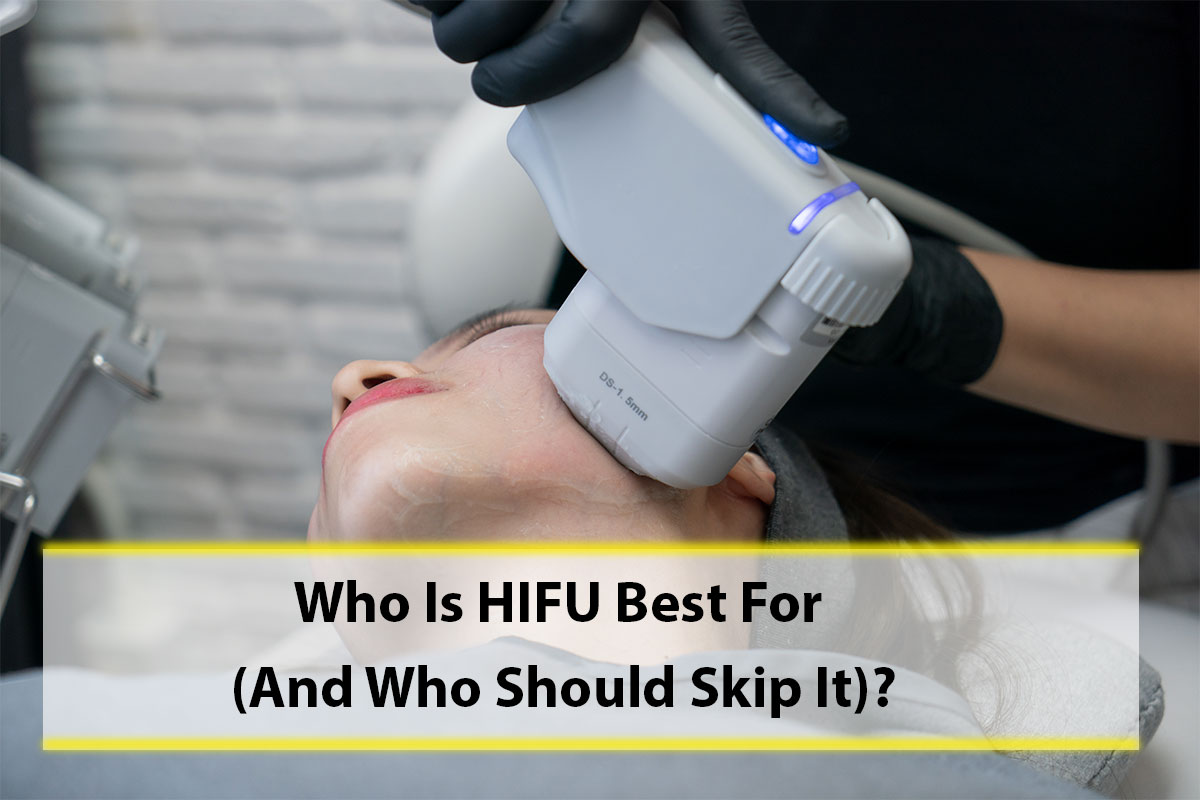
Who Is HIFU Best For (And Who Should Skip It)?
Hits: 453
If you search online for HIFU, you’ll quickly notice a problem.
Some people swear it changed their face. Others say it did nothing. A few even claim it made things worse.
So, which one is true?
The reality is simpler and more nuanced than most content makes it sound. HIFU is neither a miracle nor a scam. It’s a medical technology that works very well for a specific group of people and poorly for others.
Most disappointment around HIFU comes from misaligned expectations, not from the treatment itself.
What Exactly Is HIFU (In Plain Language)?
HIFU stands for High-Intensity Focused Ultrasound.
It uses focused ultrasound energy to heat very specific points beneath the surface of the skin, without damaging the outer layer. These points of heat trigger a wound-healing response that stimulates your body to produce new collagen.
The most important thing to understand is where HIFU works.
Unlike lasers or superficial treatments, HIFU can reach:
- Deep dermal layers
- The SMAS layer (the same foundational layer targeted in surgical facelifts)
This is why HIFU is categorized as a skin-tightening and structural support treatment, not a surface rejuvenation treatment.
What HIFU does:
- Stimulates collagen production
- Improves firmness over time
- Creates subtle lifting and tightening
- Strengthens skin structure
What HIFU does not do:
- It does not add volume
- It does not replace lost fat
- It does not resurface skin
- It does not stop aging
Who Is HIFU Actually Best For?
1. People With Mild to Moderate Skin Laxity
HIFU works best when the skin is starting to loosen, not when it is already significantly sagging.
You may be a good candidate if:
- Your jawline looks softer than before
- Your cheeks have begun to descend slightly
- Your neck skin feels less firm
- Early jowls are forming, but not heavy folds
In simple terms: HIFU tightens what’s still there.
If there’s nothing left to tighten, results will be limited.
2. People Who Want Structural Improvement, Not Volume
If your main concern is:
- Sagging
- Loss of firmness
- Skin laxity rather than hollowness
HIFU can make sense.
If your concern is:
- Flat cheeks
- Under-eye hollowness
- A “deflated” look
HIFU alone will not address that. In fact, volume-depleted faces often need supportive treatments first before tightening is considered.
3. People Who Are Comfortable with Gradual Results
HIFU does not deliver instant lifting.
Collagen takes time to regenerate. Most people see:
- Subtle changes at 4–6 weeks
- More visible improvement at 8–12 weeks
- Peak results around 3–4 months
If you expect next-day transformation, HIFU is not the right choice.
4. People Who Want Natural-Looking Changes
HIFU does not alter facial expression or structure.
There is no “done” look.
This is why many clients who prefer conservative, education-first approaches—such as those often seen at clinics like Amazing New Face—gravitate toward HIFU as part of a long-term skin strategy rather than a quick fix.
5. People Who Want Low Commitment and No Downtime
HIFU:
- Requires no anesthesia
- Has no peeling or bruising
- Allows immediate return to daily activities
This makes it appealing for people who cannot or do not want to pause their routine.
A short conversation can often clarify more than hours of online research.
If you want to talk through your skin concerns, expectations, and whether HIFU truly makes sense for you, reaching out for a proper consultation is the next logical step -not a commitment, just clarity.
Who Should Skip HIFU (Or Be Very Cautious)?
1. People With Advanced Sagging or Heavy Skin Folds
If your concern involves:
- Significant jowls
- Hanging neck skin
- Deep structural descent
HIFU will likely produce minimal visible change.
In these cases, expectations-not technology-are the issue.
2. People With Very Thin or Hollow Faces
This is one of the most misunderstood areas.
HIFU does not target fat intentionally, but:
- In very thin faces
- Or when used aggressively
- Or when used repeatedly without assessment
There may be a risk of further volume reduction.
If your face already lacks fullness, tightening without support can sometimes make the face appear more aged, not less.
3. People Expecting Permanent Results
HIFU does not stop aging.
Results typically last:
- 12 to 18 months
Maintenance is part of the reality. Anyone promising otherwise is oversimplifying.
4. People Seeking Texture, Glow, or Pigment Improvement
HIFU works deep.
It does not:
- Improve pores
- Treat pigmentation
- Smooth fine surface lines
- Enhance skin glow
Other treatments are better suited for those goals.
Does Age Matter for HIFU?
Age matters less than skin condition.
Some people in their late 30s are poor candidates.
Some in their late 50s respond well.
Key factors include:
- Collagen health
- Skin thickness
- Degree of laxity
- Facial structure
- Lifestyle (smoking, sun exposure, nutrition)
Chronological age alone is not a reliable predictor.
Does HIFU Cause Fat Loss?
This question comes up often and for good reason.
The honest answer:
- HIFU is designed to target collagen layers
- Not facial fat
However:
- Excessive energy
- Incorrect depth selection
- Over-treatment
- Poor candidate selection
can increase the risk of unwanted fat reduction.
This is why provider judgment matters more than the machine itself.
What Does HIFU Feel Like?
Most people describe HIFU as:
- Deep warmth
- Tingling
- Brief sharp sensations in certain areas (jawline, near bone)
Discomfort varies by area and individual sensitivity.
It stops immediately when energy stops.
Pain is temporary. Results are gradual.
Additional resources
- Expectations from a HIFU Session: A Step-by-Step Guide to a Non-Surgical Facelift
- Which Whitby Clinic Uses HIFU, Microneedling, and PRP-all Under One Roof?
- Is HIFU Better Than a Facelift?
- How Much Does HIFU Cost in Canada in 2025?
- Can HIFU Tighten Loose Skin on the Arms and Abdomen?
How Long Do Results Really Last?
For most people:
- Visible improvement lasts 12–18 months
- Aging continues in the background
- Maintenance sessions help preserve results
HIFU works best as part of a long-term plan, not a one-time event.
HIFU Compared to Other Treatments (Quick Clarity)
- HIFU vs Fillers: tightening vs volume
- HIFU vs Botox: skin structure vs muscle movement
- HIFU vs RF Microneedling: depth vs surface texture
- HIFU vs Surgery: stimulation vs repositioning
Each serves a different purpose. None replace the others.
Frequently Asked Questions (FAQ)
Is HIFU safe?
Yes, when used appropriately on the right candidate.
How many sessions do I need?
Most people start with one session and reassess after 3 months.
Can HIFU be combined with other treatments?
Yes. Combination plans are common and often more effective.
Is there downtime?
No downtime. Mild tenderness may occur.
Can HIFU go wrong?
Like any medical treatment, poor candidate selection and overtreatment increase risk.
Conclusion: The Right Treatment Is the One That Matches Reality
HIFU is not overhyped because it doesn’t work.
It’s overhyped because it’s often offered without context.
When used:
- On the right skin
- For the right concern
- With realistic expectations
HIFU can be a valuable tool for maintaining firmness and slowing visible aging.
When used without those considerations, it leads to confusion and disappointment.
The most important takeaway is this:
Understanding your skin matters more than choosing a trendy treatment.
Clarity not urgency is what leads to good outcomes.
About Amazing New Face
At Amazing New Face, we believe that confidence begins with understanding, not confusion. Our approach to aesthetics is calm, transparent, and focused on educating you every step of the way, so you always know exactly what’s happening and why.
Led by Alireza Hashemnejad, a graduate of Tehran University of Medical Sciences with over 20 years of experience in cosmetic procedures, we specialize in services like Botox, fillers, HIFU, PRP, and more. As a board member of the Canadian Academy of Facial Esthetics, Dr. Hashemnejad combines internationally recognized medical expertise with refined artistic judgment, ensuring each consultation is tailored to meet your unique needs.
With locations in Thornhill and Whitby, we proudly serve clients throughout Toronto and the GTA, including North York, Richmond Hill, Markham, Pickering, and Ajax. Whether you're new to aesthetic treatments or looking to refine your existing routine, you're in the hands of skilled professionals who genuinely care.
Our services include:
- Dermal Fillers: Restore volume, enhance contours, and smooth out wrinkles
- Botox Injections: Relax expression lines while maintaining natural movement
- HIFU Facial Treatments: Non-invasive skin tightening and lifting
- PRP Therapy: Naturally stimulate collagen and cellular renewal
- RF Microneedling: Improve skin texture, reduce scarring, and enhance radiance
- Skin Boosters: Deep hydration for smoother, healthier skin
- Hair Restoration: PRP-based treatments for natural hair growth
- Fat Dissolving Injections: Non-surgical chin and jawline contouring
- Non-Surgical Face Lifts: Gentle lifting for a refreshed, youthful look
- Personalized Skin Consultations: Tailored treatment plans for your face, goals, and lifestyle
Not quite ready to visit us in person? No problem! You can upload a photo of your face and share your concerns with us through a free virtual consultation, receiving professional guidance from the comfort of your home.
Whether you’re considering a non-surgical facelift in Whitby, skin rejuvenation in Thornhill, or simply want a specialist who listens, we’re here to provide you with clarity and care.
