
Amazing New Face Blog
The Best Time to Start Skin Boosters for Anti‑Aging
Hits: 172
If you wait until wrinkles are deep and skin feels thin or dull, you may already be playing catch‑up.
That’s the surprising truth many people discover about anti‑aging treatments.
Skin boosters aren’t just about fixing aging skin; they’re increasingly used to prevent visible aging before it starts showing strongly. Dermatology trends around the world are shifting toward early skin quality treatments, and skin boosters sit right at the center of that shift.
But when exactly should someone start?
Is it your 20s? 30s? When wrinkles appear?
And how do you know if a skin booster is even right for you?
Let’s break it down in clear, honest terms so you can make an informed decision.
What Are Skin Boosters?
Skin boosters are injectable treatments designed to deeply hydrate and improve the overall quality of the skin from within.
Unlike traditional fillers that add volume or change facial shape, skin boosters focus on skin health and texture.
Most skin boosters use hyaluronic acid, a naturally occurring molecule in the body that attracts and holds water.
When injected in small micro‑droplets under the skin, they can:
- Improve hydration
- Increase skin elasticity
- Smooth fine lines
- Enhance glow and texture
- Strengthen the skin barrier
Think of them as deep internal moisturizers for your skin rather than sculpting tools.
Many dermatologists describe skin boosters as a “skin quality treatment” rather than a cosmetic reshaping procedure.
Why Skin Quality Matters More Than People Realize
When most people think of aging, they think about wrinkles and sagging.
But aging skin actually changes in several ways long before those appear.
Over time the skin gradually loses:
- Collagen
- Elastin
- Natural hydration
- Cellular repair speed
The result isn’t just wrinkles.
Skin can start to look:
- Dull
- Thin
- Crepey
- Dehydrated
- Uneven in texture
These changes can start quietly in your late 20s or early 30s, even if the face still looks youthful overall.
That’s why modern aesthetic medicine is shifting toward preventive treatments that maintain skin quality early.
So, When Is the Best Time to Start Skin Boosters?
The honest answer: It depends on your skin, not just your age.
However, many aesthetic professionals see a few common starting points.
Late 20s to Early 30s: Prevention Stage
For many people, this is when the first subtle changes appear:
- Slight dullness
- Dehydrated skin
- Fine expression lines
- Makeup not sitting as smoothly
Starting skin boosters during this stage can help maintain hydration and support the skin before deeper aging begins.
The goal here isn’t correction, it’s preservation.
Think of it like maintaining your teeth before cavities develop.
Mid‑30s to 40s: Early Correction
This is the age when many people begin noticing:
- Fine lines around eyes and mouth
- Reduced glow
- Skin that feels thinner or less elastic
- Early crepey texture
Skin boosters can help restore hydration and smoothness while supporting the skin’s natural structure.
At this stage, they often become part of a long‑term skin health routine.
50+: Skin Repair and Support
For mature skin, boosters can help improve:
- Dryness
- Texture
- Fine creases
- Skin firmness
While they won’t replace volume loss treatments or surgical options, they can significantly improve skin quality and comfort.
Many patients in this age group describe their skin as “healthier and more radiant” rather than tighter.
Signs Your Skin Might Benefit from a Skin Booster
Age isn’t the only signal.
Your skin may be telling you it needs deeper hydration or support.
Common signs include:
- Skin looks dull even with good skincare
- Makeup settles into fine lines
- Skin feels dry despite moisturizers
- Fine lines appear when smiling or squinting
- Skin texture feels rough or uneven
- Loss of natural glow
If topical skincare no longer seems to make much difference, deeper hydration treatments may help.
If you are not sure if Skin booster is right for your skin, you can get a short and friendly consultation with Amazing New Face experts. We will examine your skin and tell you honestly if this method works for you or not.
How Skin Boosters Work Inside the Skin
To understand why timing matters, it helps to know what happens under the surface.
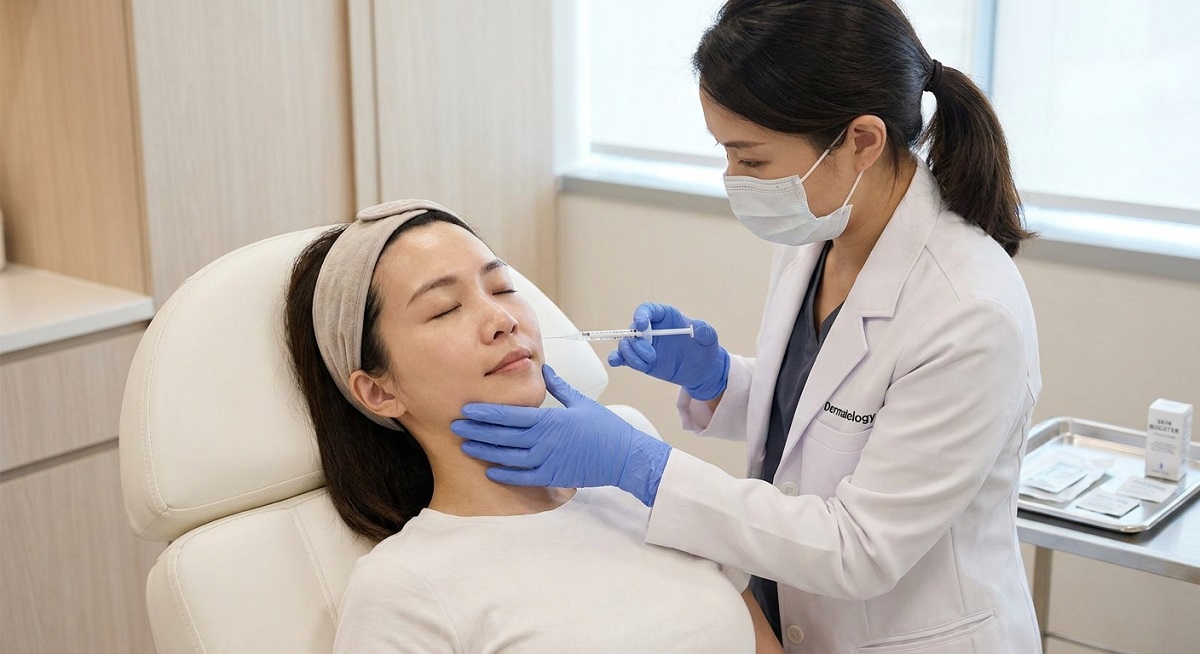
Skin boosters are typically injected into the dermis, the layer beneath the surface of the skin.
This is where collagen, elastin, and hydration structures live.
Once injected, the hyaluronic acid works by:
- Attracting water molecules
- Improving skin hydration
- Supporting the skin matrix
- Enhancing elasticity
Some newer boosters also stimulate collagen production, helping skin gradually strengthen over time.
The result is usually subtle but noticeable improvements in skin quality rather than dramatic changes.
How Skin Boosters Differ from Dermal Fillers
Many people confuse the two treatments.
They’re very different.
Dermal Fillers
Designed to:
- Add volume
- Lift facial structures
- Contour areas like cheeks or jawline
- Fill deeper folds
Skin Boosters
Designed to:
- Hydrate skin
- Improve texture
- Smooth fine lines
- Enhance overall glow
A simple way to think about it:
Fillers change shape.
Skin boosters improve skin quality.
Some patients choose both treatments, depending on their goals.
How Often Should Skin Boosters Be Done?
Most treatment plans begin with a series of sessions.
A typical approach includes:
- 2–3 initial treatments
- Spaced about 3–4 weeks apart
After the initial phase, maintenance sessions may happen every 4–6 months depending on the product used and your skin’s needs.
Because skin boosters focus on gradual improvement, results usually build progressively rather than instantly.
Areas That Can Be Treated with Skin Boosters
Although the face is the most common treatment area, boosters can improve skin quality in several places.
Common treatment areas include:
- Cheeks
- Under‑eye area
- Neck
- Décolletage
- Hands
- Around the mouth
These areas often show early signs of aging due to thinner skin and sun exposure.
What Results Should You Expect?
Skin boosters are designed for natural‑looking improvements.
Most people notice changes such as:
- Skin looking more hydrated
- Increased glow
- Smoother texture
- Reduced fine lines
- Makeup applying more evenly
The effect is often described as “well‑rested skin” rather than obvious cosmetic work.
Friends might comment that your skin looks healthy, without necessarily knowing why.
How Long Do Results Last?
Results vary depending on the product used and individual skin characteristics.
On average:
- Initial improvements appear within 1–2 weeks
- Results continue improving over 4–8 weeks
- Effects typically last 4–6 months
Regular maintenance treatments help keep the skin consistently hydrated and supported.
Are Skin Boosters Safe?
When performed by qualified medical professionals, skin boosters are generally considered very safe.
Most use hyaluronic acid, which:
- Is naturally found in the body
- Is biocompatible
- Gradually dissolves over time
Common temporary side effects include:
- Mild swelling
- Small injection bumps
- Light bruising
- Tenderness for a day or two
These usually resolve quickly.
Choosing an experienced practitioner is important for both safety and natural‑looking results.
Do Skin Boosters Replace Good Skincare?
No treatment replaces a solid skincare routine.
Skin boosters work best when combined with:
- Daily sunscreen
- Gentle cleansing
- Moisturizing
- Retinoids or active ingredients (when appropriate)
- Healthy lifestyle habits
Think of boosters as enhancing your skincare results rather than replacing them.
Are Skin Boosters Worth It If You’re Already Using Good Skincare?
Many people wonder this.
Topical skincare works on the surface layers of skin.
Skin boosters work beneath the surface, where hydration and structural proteins live.
Even the best creams can’t reach the dermis the same way.
That’s why many dermatologists see boosters as a complement to skincare, not competition.
Skin Booster Trends: Why They’re Becoming So Popular
In the past, aesthetic medicine focused heavily on volume and contouring.
Today the trend is shifting toward natural skin quality.
People want to look:
- Fresh
- Healthy
- Rested
- Natural
Rather than dramatically different.
Skin boosters support that goal by enhancing the skin itself.
This is why they’re increasingly popular among people who say:
“I don’t want to look like I had anything done.”
When You Might Want to Wait
Skin boosters aren’t for everyone at every moment.
A practitioner may recommend delaying treatment if you:
- Are pregnant or breastfeeding
- Have active skin infections
- Have certain autoimmune conditions
- Recently had specific skin procedures
A proper consultation is important to determine timing and suitability.
Additional resources
- Is Skin Booster What Dry, Dull Skin Needs?
- What Is the Best Way to Rejuvenate Skin After 40?
- Are Skin Boosters Better Than Hyaluronic Acid Fillers?
- Your Complete Guide to Choosing the Right Cosmetic Clinic in Richmond Hill
Frequently Asked Questions About Skin Boosters
Are skin boosters painful?
Most treatments involve very small injections with fine needles or cannulas. Numbing cream is often used to keep the procedure comfortable.
Most people describe the sensation as mild pinching or pressure.
How long does a treatment take?
A typical session takes 20–40 minutes, depending on the treatment area.
Many people schedule them during a lunch break.
Is there downtime?
Downtime is usually minimal.
You may see:
- Tiny bumps
- Mild redness
- Slight swelling
These often settle within 24–48 hours.
Will I look different right away?
Skin boosters focus on gradual improvement.
You may notice some hydration quickly, but the best results appear over several weeks as the skin absorbs the treatment.
If you want to know when is the best time to start Skin booster for your skin, the Amazing New Face team can design a personalized program for you. Contact us now to book a consultation or get more information.
The Bottom Line: When Should You Start Skin Boosters?
The best time to start skin boosters isn’t defined by a birthday.
It’s when you begin noticing early signs that your skin needs deeper hydration and support.
For many people, that happens somewhere between the late 20s and mid‑30s, though every skin type is different.
Starting earlier often means maintaining healthy skin rather than correcting advanced changes later.
But the most important step isn’t rushing into treatment.
It’s having an informed conversation with a qualified professional who can evaluate your skin and recommend the right approach.
Because the real goal of modern aesthetic medicine isn’t looking different.
It’s helping your skin stay healthy, vibrant, and naturally beautiful at every age.
About Amazing New Face
At Amazing New Face, we believe looking and feeling beautiful should be simple. No pressure. No confusion. Just clarity, comfort, and confidence.
Our treatments are led by Alireza Hashemnejad, an experienced aesthetic professional and graduate of Tehran University of Medical Sciences, with more than 20 years of hands‑on experience in cosmetic procedures such as fillers, Botox, HIFU, PRP, and more.
As a board member of the Canadian Academy of Facial Esthetics, he brings international knowledge and a unique blend of medical precision and artistic technique to every consultation.
With clinics in Thornhill and Whitby, we proudly welcome clients from across Toronto (GTA), North York, Richmond Hill, Markham, Pickering, Ajax, and surrounding areas. Whether this is your first time exploring aesthetic treatments or you’re updating your routine, you’ll be supported by skilled, caring professionals.
Here’s what we offer to help you feel confident and refreshed in your own skin:
Dermal Fillers in Toronto Near Me – Restore volume, enhance contours, and soften lines
Botox Injections in Toronto Near Me – Smooth expression lines for a naturally relaxed look
HIFU Facial Treatments in Toronto Near Me – Non‑invasive lifting and skin tightening
PRP Therapy in Toronto Near Me – Boost collagen and skin renewal using your body’s own growth factors
RF Microneedling in Toronto Near Me – Improve texture, minimize scars, and enhance radiance
Mesotherapy in Toronto Near Me – Deep hydration and nourishment with targeted micro‑injections
Skin Boosters in Toronto Near Me – Long‑lasting hydration for glowing, healthy‑looking skin
Hair Restoration Treatments in Toronto Near Me – Support natural hair growth with PRP-based solutions
Fat Dissolving Injections in Toronto Near Me – Non‑surgical contouring for the jawline and chin
Non‑Surgical Face Lifts in Toronto Near Me – Gentle lifting techniques for a refreshed, youthful look
Personalized Skin Consultations in Toronto Near Me – Customized guidance based on your unique goals
Not ready to visit the clinic just yet?
You can upload a photo and share your concerns or goals with us anytime. We offer
Whether you’re considering a non‑surgical facelift in Whitby, exploring skin rejuvenation in Thornhill, or simply want advice from someone who listens, we’re here for you.
