
Amazing New Face Blog
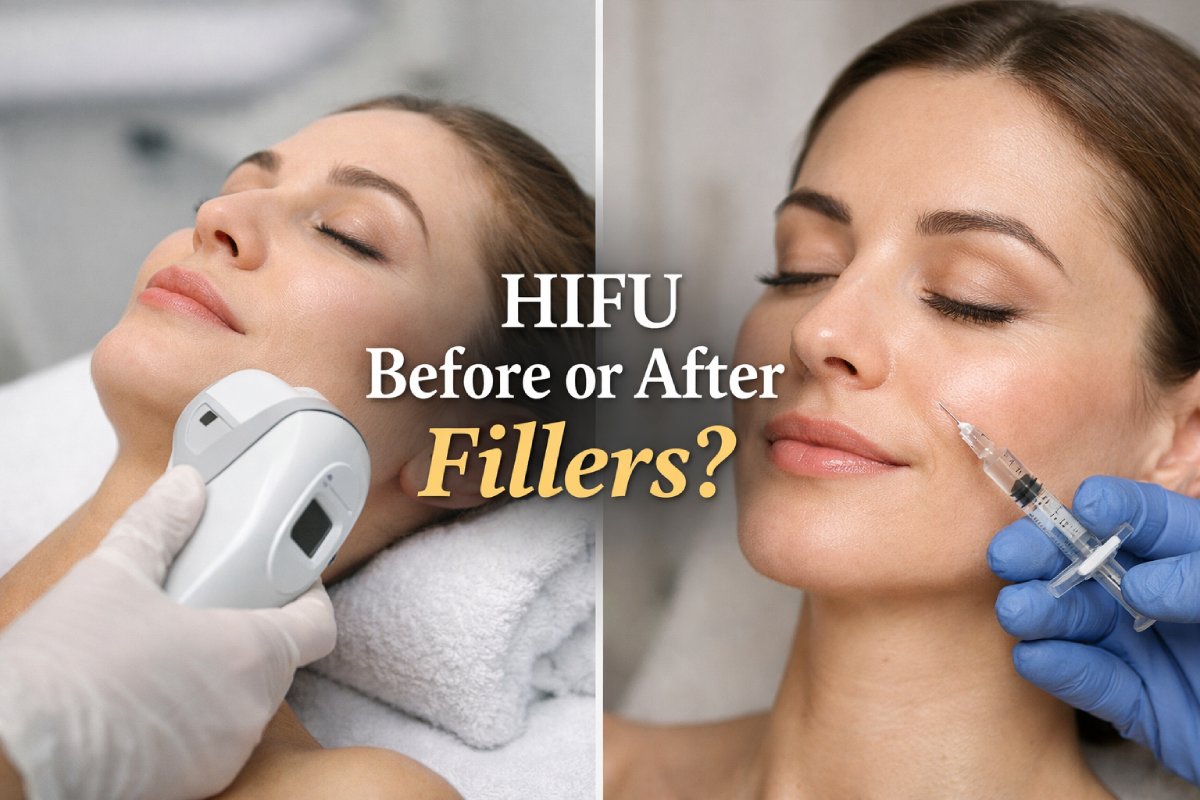
HIFU Before or After Fillers? The Right Order Matters
Hits: 2318
You’re ready to invest in your face and you want it to look refreshed, lifted, and still like you.
But after 15 minutes of research, you hit the same confusing question everyone does:
Should you do HIFU before or after fillers?
It sounds like a small detail. It isn’t.
The order can affect:
- how natural your result looks
- how long your filler lasts
- whether you need more product than you actually do
- whether you accidentally “cancel out” part of a treatment you paid for
Let’s break it down in plain language.
What HIFU Does (And What It Doesn’t)
HIFU stands for High-Intensity Focused Ultrasound. It’s a non-surgical tightening treatment.
What it’s good for
HIFU is mainly for mild to moderate sagging, like:
- soft jowls starting
- jawline losing sharpness
- cheeks dropping a little
- loose neck skin
- “My face looks heavier than it used to” vibes
How it works (simple version)
HIFU sends focused ultrasound energy under the skin and creates controlled heat in deeper support layers. Your body responds by rebuilding collagen over time.
Important expectations
- Results are gradual, not instant
- You usually notice changes over 2–3 months, sometimes continuing up to 6 months
- It tightens, but it does not replace volume
So if the issue is hollow cheeks or under-eyes, HIFU alone won’t “fill” that.
What Dermal Fillers Do (And What They Don’t)
Most dermal fillers are made from hyaluronic acid (HA), a gel that adds structure and volume.
What fillers are good for
Fillers help with:
- flatter or hollow cheeks
- under-eye hollowing (for the right candidates)
- lip volume or definition
- jawline structure and contour
- deeper folds (like nasolabial lines) in select cases
What to expect
- Results are immediate
- You’ll see shape and support right away (with some swelling at first)
Important expectations
Fillers don’t tighten skin. They can support tissue, but if the main issue is laxity, adding volume without tightening can sometimes look heavy or overfilled.
So… HIFU Before or After Fillers?
The best general rule
In most cases: do HIFU BEFORE fillers.
Why? Because it’s usually smarter to:
- tighten what can be tightened
- then add only the volume you still need
This tends to look more natural and often uses less filler.
Why Doing HIFU After Fillers Can Be a Problem
HIFU delivers energy through layers where filler may be sitting (depending on the area and technique). That energy and heat may reduce filler longevity in the treated area.
What can happen if you do HIFU on an area with filler:
- filler may break down faster
- results may not last as long as expected
- in some cases, the area can look less stable while things settle
To be clear: HIFU doesn’t “melt” filler instantly, but it can be a bad value move if you just paid for filler and then heat the same area.
Why HIFU First Usually Makes More Sense
Doing HIFU first gives you a clearer “baseline” once tightening begins.
Benefits of HIFU first
- collagen builds and the skin firms up naturally
- your injector can better judge what volume is truly missing
- you often need less filler
- lower risk of looking puffy or “done”
- better long-term harmony (lift + structure)
A lot of people think they need filler, when what they actually need first is support.
The Timing: How Long Should You Wait Between HIFU and Fillers?
Here’s the timeline most people find practical.
Recommended order (most common)
HIFU → wait 4 to 12 weeks → fillers
Why that window?
- HIFU results aren’t immediate
- waiting gives the tissue time to start tightening
- then filler placement becomes more accurate and conservative
If your goal is “subtle and natural,” waiting matters.
If you already have fillers
If fillers were done first, a cautious approach is:
- avoid HIFU over the same areas for a while
- consider waiting 4–6 months before HIFU in that zone (depends on product, depth, and how your face responds)
- or do HIFU in areas without filler
A good provider won’t use a cookie-cutter rule. They’ll plan around your face.
If you want lift and volume done strategically - not reactively - book a consultation and map the sequence properly.
Who Should Usually Start With HIFU?
HIFU first often makes sense if your main concern is:
- sagging more than hollowing
- a softer jawline
- early jowls
- cheeks dropping slightly
- “I want lift, not a filled look”
This is common in your 30s and early 40s, but it depends more on skin behavior than age.
When Fillers Might Come First
Fillers may come first when the main issue is volume loss, not skin laxity.
Examples:
- under-eye hollowing (when suitable)
- flat cheeks with minimal sagging
- lips (HIFU isn’t for lips)
- structural chin/jaw shaping
- facial balancing where lift isn’t the priority
Even then, your provider should plan ahead: if you want HIFU later, they’ll consider placement, depth, and timing.

Common Mistakes People Make (That Lead to “Why Doesn’t It Look Right?”)
These are the big ones:
- doing treatments too close together
- treating based on trends instead of anatomy
- chasing “snatched” results with too much volume
- thinking more product = better outcome
- not having a plan (just booking whatever is popular)
The face responds best to a strategy, not stacking.
The “Best of Both” Strategy: How HIFU + Fillers Work Together
If you combine them thoughtfully, you can get:
- lower face lift effect (HIFU)
- more defined jawline and better cheek support (fillers)
- firmer overall look (collagen rebuilding)
- longer-lasting value (often less filler needed)
A simple way to think about it:
- HIFU = tightening and support
- Fillers = structure and shape
Support first, structure second is usually the most natural path.
How Long Results Typically Last
These ranges vary by device, product, and your metabolism, but generally:
HIFU
- often 12–18 months for many people
- gradual improvement, then slow fade
Fillers
- often 6–18 months depending on:
- product type
- placement area
- movement in that region (lips move a lot, for example)
When HIFU is done first, filler can sometimes “go further” because the tissue has better support and you may use less.
Safety Notes You Actually Need to Know
Both treatments are considered safe when done by trained professionals, but problems are more likely when:
- treatments are done too aggressively
- energy settings are wrong
- anatomy is not respected
- someone tries to do everything in one appointment, fast
Possible issues when combining poorly:
- faster filler breakdown
- swelling that takes longer to settle
- unevenness that could’ve been avoided with better timing
Final Answer: The Simple Checklist
Choose HIFU first if:
- sagging is your main concern
- you want lift and firmness
- you want to avoid overfilling
- you want a staged, natural plan
Choose fillers first if:
- volume loss is clearly the main issue
- you want lip enhancement
- you need structural reshaping
- laxity is minimal
The most common “smart order”
Tighten first. Then fill.
Additional resources
- Who Is HIFU Best For (And Who Should Skip It)?
- Expectations from a HIFU Session: A Step-by-Step Guide to a Non-Surgical Facelift
- How to Choose Between Botox, Fillers, and PRP Based on Your Skin Needs
- Which Whitby Clinic Uses HIFU, Microneedling, and PRP-all Under One Roof?
FAQ: HIFU and Fillers
1) Can HIFU dissolve fillers?
Not instantly, but it may speed up filler breakdown in the treated area.
2) How long after HIFU can I get fillers?
Often 4–12 weeks, depending on your response and the plan.
3) Can I do HIFU and fillers on the same day?
Usually not recommended in the same area, because timing affects stability and value.
4) Does HIFU hurt?
Some discomfort is normal (heat, zaps, tenderness), but it’s usually tolerable and temporary.
5) Will I need less filler after HIFU?
Often, yes. Tightening can reduce the amount of volume needed for balance.
6) Does HIFU replace filler?
No. HIFU tightens. Filler replaces volume. Different jobs.
7) Which lasts longer?
HIFU can last up to 12–18 months for many people. Fillers vary widely by area and product.
8) Can HIFU be done on lips?
No. Lips are typically treated with filler, not HIFU.
9) Is HIFU safe over old filler?
Sometimes, but it depends on where the filler is, how much, and how long ago it was placed.
10) Who is not a good candidate for HIFU?
People with severe laxity may need surgical options to get the result they want.
Conclusion: Why the Order Really Matters
If you remember one thing, make it this:
HIFU is usually the “lift first” step. Fillers are the “shape second” step.
Doing HIFU first lets your face tighten naturally, so you don’t overfill. It can also protect your investment by reducing the chance that HIFU energy shortens filler longevity.
And if you already have filler? You’re not stuck. You just need a plan that respects timing and areas.
The best question to ask in a consultation is not “Which one is better?”
It’s this:
“What does my face need first-lift or volume?”
That one shift usually leads to the most natural, long-lasting outcome.
About Amazing New Face
At Amazing New Face, we believe great results start with clarity - not pressure.
Every treatment is planned with structure, balance, and long-term strategy in mind, not trends.
Led by Dr. Alireza Hashemnejad, a graduate of Tehran University of Medical Sciences with over 20 years of experience and a board member of the Canadian Academy of Facial Esthetics, our clinic combines medical expertise with an artistic eye. The focus is always on subtle, natural-looking outcomes.
We specialize in treatments such as Botox injections, dermal fillers, HIFU Facial Treatments, PRP, RF microneedling, skin boosters, fat dissolving injections, and personalized non-surgical lift plans - all tailored to your anatomy and goals.
With locations in Thornhill and Whitby, we serve clients across Toronto and the GTA who want thoughtful planning, not rushed procedures.
Not ready to visit in person?
At Amazing New Face, it’s never about doing more - it’s about doing what makes sense for your face.
