
Amazing New Face Blog
HIFU Downtime: What Should You Plan for After a Session?
Hits: 34
If you are considering a HIFU treatment, one practical question probably matters almost as much as the treatment itself:
What should you expect afterward?
Can you return to work? Could your skin look red or feel tender? Should you avoid booking HIFU right before an important event?
There is no single recovery experience that applies to everyone. HIFU does not involve surgical recovery, but temporary reactions can still occur.
The best approach is to understand what may happen and plan your schedule with some flexibility.
Table of Contents
- At a Glance: Key Takeaways
- What Does HIFU Downtime Really Mean?
- What Might You Notice After HIFU?
- Can You Work or Make Plans After HIFU?
- Should You Schedule HIFU Before an Important Event?
- Does the Treatment Area Matter?
- When Might HIFU Not Be the Right Option?
- Questions to Ask During Your HIFU Consultation
- Frequently Asked Questions
- Summary
- About Amazing New Face
At a Glance: Key Takeaways
- HIFU does not involve surgical recovery, but temporary skin reactions may occur.
- Redness, swelling, tenderness, sensitivity, or bruising have been reported after aesthetic ultrasound procedures.
- Individual experiences can vary depending on the treatment area and treatment plan.
- Avoid assuming that “non-surgical” automatically means “no downtime.”
- Skin laxity, texture concerns, and volume loss are different issues and may require different approaches.
- Leave some flexibility before weddings, photography, travel, or important professional events.
- A consultation should determine whether HIFU matches your concern before treatment is planned.
What Does HIFU Downtime Really Mean?
HIFU downtime usually refers to temporary changes that may affect how your skin looks or feels after treatment rather than a period of surgical recovery. Some people may continue their normal routine quickly, while others may prefer additional flexibility because of redness, tenderness, swelling, or sensitivity.
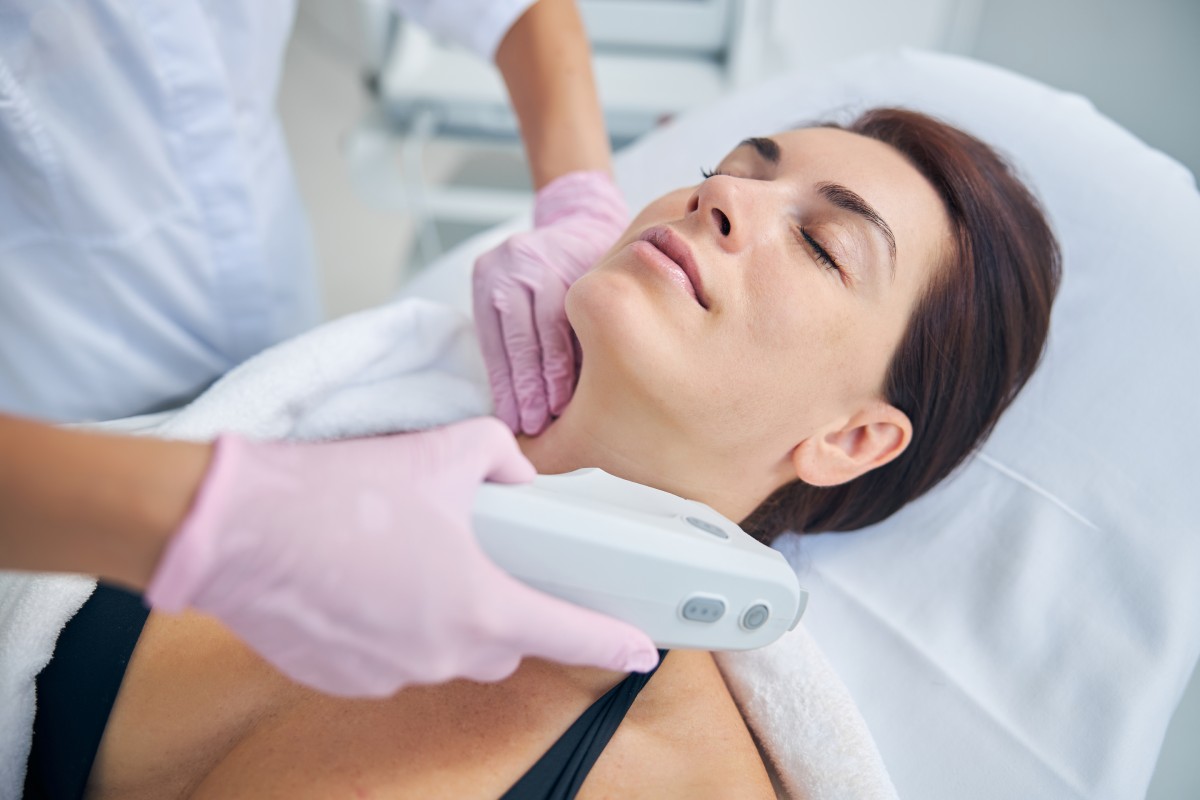
HIFU uses focused ultrasound energy to target tissue beneath the skin.
Because there are no surgical incisions, people often assume they can expect absolutely no downtime.
That is not always the best way to think about it.
You may not need to take several days away from normal activities, but your skin could temporarily look or feel different.
That matters if you have work meetings, social plans, photography, or another situation where visible redness or swelling would bother you.
If you are researching the procedure itself, you can also review the clinic's information about HIFU facial treatment.
What Might You Notice After HIFU?
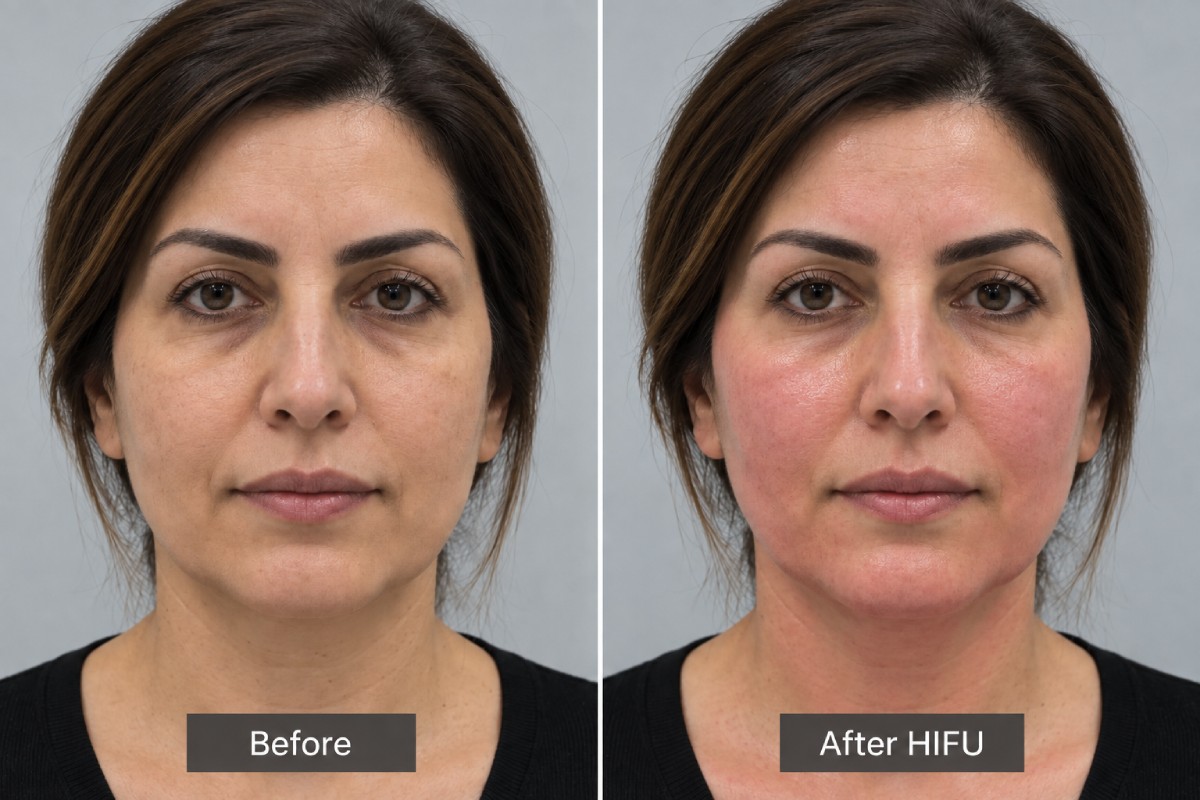
Possible short-term reactions after HIFU may include redness, swelling, tenderness, sensitivity, or bruising. Not everyone experiences the same response, and the intensity can vary. Any reaction that feels unusual, significant, or persistent should be discussed with the treating clinic or an appropriate healthcare professional.
Studies of aesthetic microfocused ultrasound have reported temporary reactions including redness, swelling, tenderness, and bruising. These reactions and their intensity can vary between individuals.
The important point is that individual reactions vary.
One person may feel comfortable returning to normal activities soon after treatment, while another may notice enough tenderness or swelling to want a quieter schedule.
That is why absolute promises such as:
“No downtime.”
“No redness.”
“No swelling.”
should be treated cautiously.
A more useful question to ask during your consultation is:
What short-term reactions are possible with the treatment being recommended for me?
Can You Work or Make Plans After HIFU?
Many people may be able to continue ordinary activities after HIFU, but whether you personally feel comfortable returning immediately to work or social plans depends on your response, the treatment area, and how much temporary redness or tenderness would affect your day.
Your schedule matters.
For example, mild redness may not be important if you work from home.
But it could matter more if you have:
- client meetings
- professional photography
- presentations
- social events
- video calls
- travel plans
Being physically able to continue your day is not always the same as feeling comfortable with how the treatment area looks or feels.
For first-time clients, leaving a little flexibility can be useful because you do not yet know how your skin will respond.
Should You Schedule HIFU Before an Important Event?
If you are planning HIFU before a wedding, vacation, photography session, work event, or other important date, avoid assuming that your skin will look completely unchanged immediately afterward. Leaving extra time gives you flexibility if temporary redness, swelling, or tenderness occurs.
There is no universal recovery timeline that applies to every person.
Your response may depend on factors such as:
- treatment area
- individual skin and tissue characteristics
- previous treatments
- treatment plan
- technology being used
Instead of asking:
“How close to my event can I have HIFU?”
a better question may be:
“How much flexibility should I leave in case my skin reacts temporarily?”
Mention important dates during your HIFU consultation so they can be considered during treatment planning.
Does the Treatment Area Matter?
Yes. HIFU treatment planning can vary by area because facial and neck tissues are not identical. A concern around the jawline, neck, or face may involve skin laxity, volume, tissue distribution, texture, or several factors at the same time.
This is important for anyone researching HIFU jawline, HIFU neck treatment, or HIFU skin tightening.
For example, a less-defined jawline does not automatically mean that skin laxity is the only factor involved.
The appearance may also relate to:
- facial anatomy
- tissue distribution
- volume changes
- skin texture
- skin laxity
These concerns are not interchangeable.
Someone mainly concerned about texture may need a different discussion from someone concerned about laxity.
Similarly, someone with noticeable volume changes should not automatically assume that tightening treatment is the best starting point.
The clinic's article about whether HIFU may reduce double-chin fat explores another factor that may affect treatment planning.
When Might HIFU Not Be the Right Option?
HIFU may not be the most appropriate approach when the main concern involves something other than skin laxity. Facial volume, skin texture, previous procedures, anatomy, and medical history may all affect which options are worth discussing.
This is why choosing a treatment before identifying the concern can be misleading.
Instead of beginning with:
“I need HIFU for my jawline.”
it may be more useful to ask:
“What is contributing to the change I am seeing?”
A consultation can then explore whether the concern appears mainly related to laxity or whether another factor should be considered.
Your treatment history is also relevant.
Tell the clinic about previous aesthetic treatments and relevant medical information.
Do not stop medications or change medical care based on general online advice. Medication and health-history questions should be discussed with an appropriately qualified healthcare professional.
Most importantly, reading about HIFU online does not confirm that you are personally a suitable candidate.
- HIFU for Jawline Definition: What Can It Change Without Adding Volume?
- HIFU in Whitby: Who Is a Good Candidate, and Who May Need Another Option?
- HIFU Facial Price in Toronto 2026 + What Actually Affects the Cost?
- Expectations from a HIFU Session: A Step-by-Step Guide to a Non-Surgical Facelift
Questions to Ask During Your HIFU Consultation
A useful HIFU consultation should explain what concern is being treated, why HIFU is being considered, what temporary reactions may occur, and whether another approach should also be discussed. The goal is informed treatment planning rather than simply confirming a procedure chosen online.
Useful questions include:
What is causing the concern I am seeing?
Ask whether the issue appears mainly related to laxity, texture, volume, anatomy, or a combination.
What might I notice after treatment?
Ask about possible redness, swelling, tenderness, sensitivity, or bruising.
Can I return to work afterward?
Explain what your job involves and whether visible temporary reactions would be a concern.
How should I plan around an important event?
Tell the clinic about weddings, vacations, photography, or professional commitments.
Are there reasons HIFU may not suit my concern?
A balanced consultation should include limitations and alternatives when relevant.
What device will be used?
If device licensing or regulatory status is important to you, ask for the exact device name so current information can be verified.
For people in Thornhill, Whitby, and the GTA who are considering HIFU, Amazing New Face provides consultations through its Thornhill and Whitby locations.
Request Consultation
If you are considering HIFU and want to understand whether it matches your concern, you can request a consultation to discuss suitability, expectations, and treatment planning.
Frequently Asked Questions
Is there downtime after HIFU treatment?
HIFU does not involve surgical recovery, but temporary reactions may occur. These can include redness, swelling, tenderness, sensitivity, or bruising. Individual experiences vary, so it is better to leave some flexibility in your schedule rather than assume that there will be absolutely no visible or physical reaction.
Can I go back to work after HIFU?
Some people may feel comfortable returning to work or normal activities soon afterward. However, your decision may depend on your individual response and the type of work you do. If temporary redness or swelling would affect meetings, presentations, photography, or client-facing responsibilities, allowing extra flexibility may be helpful.
Can I have HIFU before a wedding or important event?
You may want to avoid scheduling a first HIFU session immediately before an important event. Temporary reactions vary, and there is no universal timeline that guarantees exactly when your skin will look completely settled. Discuss your event date during your consultation before deciding when to schedule treatment.
Is redness or swelling possible after HIFU?
Yes. Temporary redness, swelling, tenderness, and similar short-term reactions have been reported in studies of aesthetic microfocused ultrasound. However, the type and intensity of a reaction can vary. If you experience symptoms that seem unusual, significant, or persistent, contact the treating clinic or an appropriate healthcare professional.
Does HIFU downtime depend on the area treated?
It can. Different areas of the face and neck have different anatomy and tissue characteristics, so the post-treatment experience may vary. The area treated, your individual response, previous aesthetic procedures, and the treatment plan can all influence temporary redness, tenderness, swelling, or sensitivity after a HIFU session.
Is HIFU suitable for facial volume loss?
Not necessarily. Volume loss and skin laxity are different concerns. If volume is the main issue, HIFU may not address the concern in the way you expect. A consultation should identify what is contributing to the appearance before determining whether HIFU or another approach should be discussed.
Summary
HIFU downtime is better understood as a range of possible temporary reactions rather than a fixed recovery period. Some people may continue normal activities comfortably, while others may notice redness, swelling, tenderness, sensitivity, or bruising. Good planning begins with identifying the actual concern and leaving enough flexibility around work and important events. A consultation can help determine whether HIFU matches your needs and what you should realistically expect afterward.
About Amazing New Face
Amazing New Face provides aesthetic services at clinic locations in Thornhill and Whitby, Ontario. Current service families include HIFU, dermal filler services, PRP and mesotherapy, microneedling, RF microneedling, and cosmetic injection services. For people considering HIFU, a consultation can help clarify concerns, treatment suitability, previous treatment history, realistic expectations, and practical planning before a decision is made.
