
Amazing New Face Blog

Nose Filler and Facial Proportion: Why the Same Change Looks Different on Different Faces, A Nose Filler Consultation Guide
Hits: 83
Two people can ask for the same small nose change and still need different treatment plans.
During a nose filler consultation, the provider may consider how the nose relates to the forehead, chin, lips, profile, skin, and overall facial proportions before discussing whether filler makes sense.
A change that looks balanced on one face may look different on another. Good planning starts with individual anatomy and realistic expectations rather than copying someone else’s result.
Table of Contents
- At a Glance – Key Takeaways
- Why Does the Same Nose Filler Change Look Different on Different Faces?
- What Facial Proportions Matter During a Nose Filler Consultation?
- How Can Anatomy, Skin Quality, and Previous Treatment Affect the Plan?
- Why Does Conservative Filler Treatment Planning Matter?
- What Can Nose Filler Change, and What Can It Not Change?
- When Might a Different Option Make More Sense?
- What Should You Discuss at a Nose Filler Consultation in Thornhill, Whitby, or the GTA?
- Frequently Asked Questions
- Summary
- About Amazing New Face
At a Glance – Key Takeaways
- Nose filler should be planned in relation to the whole face, not the nose alone.
- The same contour change can look different depending on the forehead, chin, lips, profile, and facial width.
- Skin characteristics, asymmetry, previous filler, and previous procedures may affect planning.
- Filler adds volume; it does not remove bone, cartilage, or nasal tissue.
- More filler does not automatically create a more balanced result.
- A consultation should explain realistic limits as well as possible changes.
- Some goals or anatomical situations may call for a different approach.
Why Does the Same Nose Filler Change Look Different on Different Faces?
A similar filler placement can create a different visual effect because every face has different proportions. Nose length, bridge height, chin projection, forehead shape, lip position, facial width, and natural asymmetry all influence how the nose is perceived. Treatment therefore needs to be considered in the context of the entire face.
Chin projection, facial width, and asymmetry can all change how noticeable an adjustment looks.
A reference image can communicate a preference, but it cannot predict the same result on another face. A better question is: “What change would make sense for my proportions?”
What Facial Proportions Matter During a Nose Filler Consultation?
A nose filler consultation may assess how the nose relates to surrounding features from several angles. The goal is not to force the face into one mathematically “perfect” ratio. It is to understand whether a proposed contour change fits the person’s existing anatomy and how it may affect the overall appearance.
The assessment may consider bridge height, tip shape, chin projection, facial width, asymmetry, and several viewing angles.
A natural-looking filler result should not mean using one template for every face. Facial balance with fillers depends on how the proposed change fits existing features.
The clinic’s information about nose filler treatment and non-surgical nose correction describes filler as adjusting selected contours rather than changing underlying bone structure.
How Can Anatomy, Skin Quality, and Previous Treatment Affect the Plan?
Treatment planning can vary because the visible shape of the nose is only one part of the assessment. Skin characteristics, underlying anatomy, existing asymmetry, scar tissue, previous filler, and previous nasal procedures may all affect what a provider needs to consider before discussing a treatment approach.
Previous filler or surgery can change anatomy and tissue characteristics, so that history should be reviewed.
Skin thickness can also influence how contours appear. During an aesthetic consultation, discuss previous procedures, relevant medical history, medications, allergies, and the feature you hope to change. Health Canada advises discussing relevant health information and potential risks with an appropriately qualified healthcare professional.
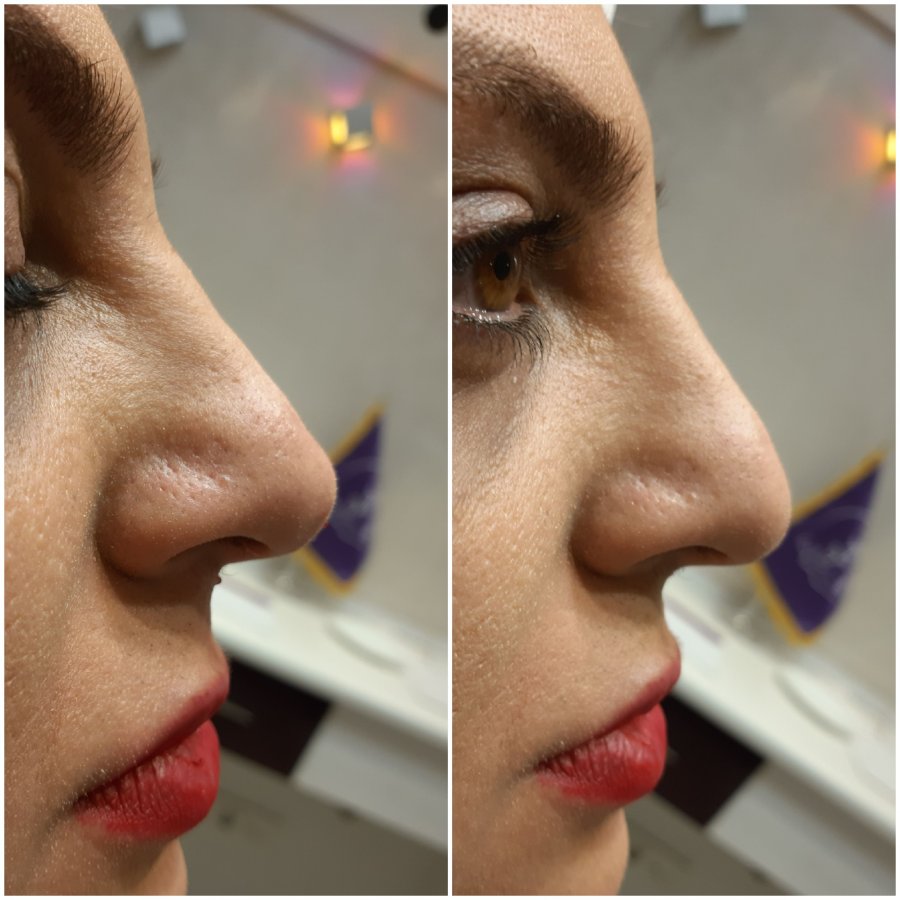
Why Does Conservative Filler Treatment Planning Matter?
Conservative planning matters because filler adds volume, and even a small contour adjustment can affect more than one view of the face. The goal should not automatically be to use more product. The provider and client should first clarify the concern, realistic limitations, and possible trade-offs before deciding whether treatment is appropriate.
For example, filler may make a dorsal bump appear smoother from the side without removing it. Added volume can also affect another viewing angle.
In filler treatment planning, a conservative approach may mean accepting a smaller change or not treating a particular area.
What Can Nose Filler Change, and What Can It Not Change?
Nose filler may alter selected contours by adding volume, but it cannot remove nasal tissue or physically reduce bone or cartilage. This distinction is important when deciding whether the treatment matches the desired outcome. A visual improvement in one contour should not be confused with structural reduction or surgical reshaping.
Depending on anatomy and planning, filler may sometimes be considered for selected contour concerns such as creating the appearance of a smoother bridge.
However, it does not physically make the nose smaller or replace assessment for breathing concerns or substantial structural changes. Because filler adds material, the provider should explain possible trade-offs. Understanding these limitations is part of setting realistic filler expectations.
When Might a Different Option Make More Sense?
A different approach may deserve consideration when the desired change requires reduction, major structural alteration, functional assessment, or when a person’s anatomy or treatment history makes filler unsuitable. A consultation should leave room for the answer to be that nose filler may not be the right treatment for a particular goal.
Someone seeking substantial size reduction, major structural change, or assessment for breathing concerns may need an option outside the scope of cosmetic filler. Previous filler, surgery, or scar tissue may also affect planning.
Dermal fillers carry risks. Health Canada lists reported reactions including bruising, swelling, infection, allergic reactions, skin discolouration, and improper placement. Rare but serious vascular complications involving vision have also been reported in medical literature, including cases involving the nasal region.
A dermal filler consultation should therefore cover relevant medical history, potential complications, and the proposed approach.
- What Should You Look for When Choosing a Nose Filler Clinic in Toronto?
- Nose Filler Consultation: What Should You Ask Before Treatment?
- The Cost of Nose Fillers in Canada: What You Should Expect to Pay
What Should You Discuss at a Nose Filler Consultation in Thornhill, Whitby, or the GTA?
A useful consultation should focus on your anatomy, the specific change you want, realistic limitations, previous treatment history, potential risks, and whether filler is appropriate for that goal. For people considering nose filler in Thornhill, Whitby, or elsewhere in the GTA, the discussion should be individualized rather than based on a standard treatment package.
Instead of asking only, “How much filler do I need?”, consider asking:
- How might this change look from the front and side?
- What can filler realistically change or not change?
- Could adding volume make another area more prominent?
- Does my previous treatment history affect the plan?
- What risks should I understand?
- Are there reasons you would recommend that I not proceed?
For more preparation guidance, read the questions to ask before nose filler treatment.
Request Consultation: If you are considering nose filler and want to discuss your proportions, treatment goals, previous procedures, and realistic limitations, you can request a consultation with Amazing New Face.
Frequently Asked Questions
Does the same amount of nose filler look the same on everyone?
No. Even when a similar amount of filler is used, the visual effect can differ because facial proportions, nasal anatomy, skin characteristics, existing asymmetry, and surrounding features vary from person to person. Treatment planning should therefore focus on the individual face rather than assuming that another person’s result can be reproduced exactly.
Can nose filler make my nose look smaller?
Nose filler adds volume rather than removing bone, cartilage, or other nasal tissue, so it does not physically make the nose smaller. In some cases, changing selected contours may alter how the nose is visually perceived from certain angles. Whether that effect suits your goal depends on your anatomy and should be discussed during consultation.
Why would a provider look at my chin or forehead during a nose filler consultation?
The nose is part of the overall facial profile, so nearby features can influence how its size, projection, and contour are perceived. The forehead-to-nose transition, lips, chin, and facial width may all affect balance. Reviewing these relationships helps the provider assess whether a proposed change may look proportionate from more than one angle.
Does skin quality affect nose filler results?
Skin characteristics can influence how underlying contours appear and how noticeable a filler adjustment may look. Skin is only one part of the assessment, however. Nasal anatomy, facial proportions, previous filler, previous procedures, and treatment goals can also affect planning. These factors should be considered together during an individualized consultation.
Should previous nose filler or rhinoplasty be discussed?
Yes. Previous filler, rhinoplasty, injuries, or other nasal procedures may affect anatomy, scar tissue, and treatment planning. Give the provider an accurate history during your consultation. A previous procedure does not automatically mean additional filler is appropriate or inappropriate; it means the existing anatomy and treatment history need careful assessment.
How do I know whether a natural-looking filler result is realistic for me?
“Natural-looking” can mean different things to different people, so the consultation should clarify what you want changed and what would feel excessive. The provider should explain what filler may realistically accomplish, what it cannot change, and any trade-offs involved. A responsible plan should be based on your anatomy and expectations rather than a reference photo.
Summary
Nose filler is not simply a matter of placing the same product in the same location on every face. Facial proportions, anatomy, skin characteristics, previous treatments, and the desired change can all affect planning. A thoughtful nose filler consultation should explain what may be possible, what filler cannot achieve, and when another approach may deserve consideration. The goal is an informed decision based on your own face rather than someone else’s result.
About Amazing New Face
If you are considering nose filler treatment, a personalized consultation can help you understand how your facial proportions, anatomy, previous treatments, and aesthetic goals may influence the treatment plan.
At Amazing New Face, consultations are available at the Thornhill and Whitby clinics. The clinic offers aesthetic services including dermal fillers, with treatment planning focused on individual anatomy, realistic expectations, and a conservative approach rather than a one-size-fits-all result.
Ready to Explore Your Options?
Book a nose filler consultation at Amazing New Face to discuss your goals, ask questions, and learn whether nose filler may be an appropriate option for you.
