
Amazing New Face Blog
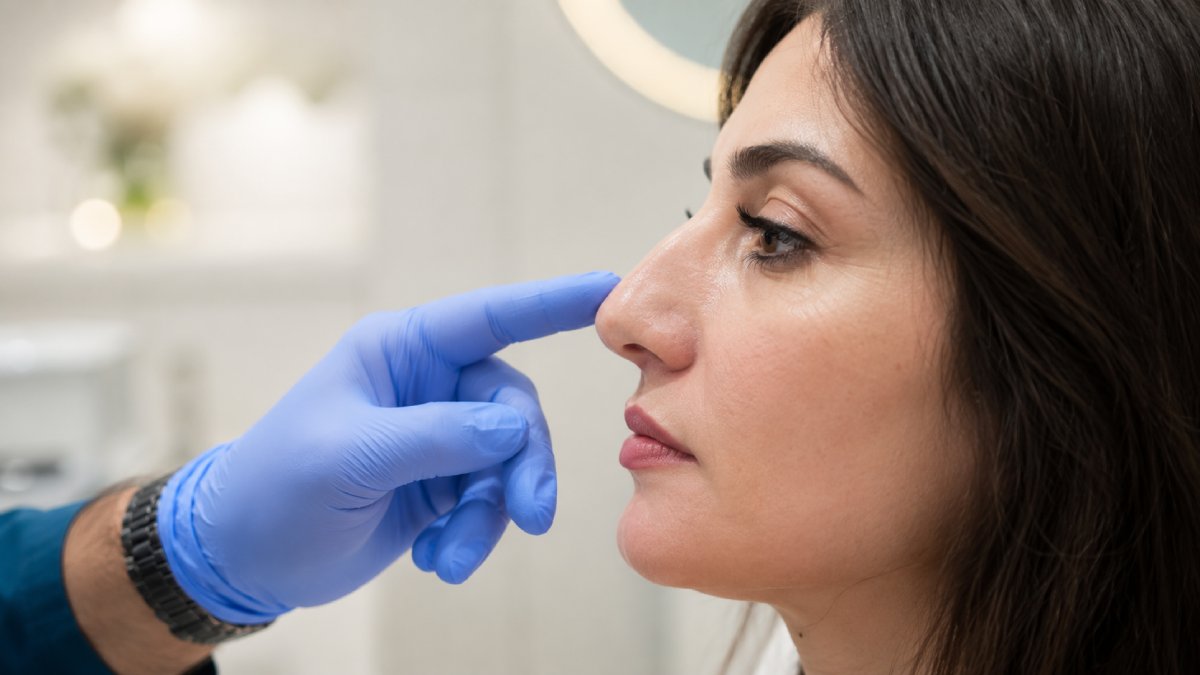
Nose Filler Consultation: What Should You Ask Before Treatment?
Hits: 106
Thinking about nose filler often begins with a simple question: “Could a small change make my nose look more balanced?”
But before thinking about how much filler you may need, how long the result might last, or how quickly treatment can be done, there is a more important first step: the consultation.
A nose filler consultation should not be a quick conversation about where to inject. It should include a careful assessment of your facial anatomy, treatment goals, previous procedures, medical history, realistic expectations, the filler being considered, potential complications, and what would happen if something did not go according to plan.
This is particularly important with the nose. Its vascular anatomy makes it a more complex area to inject than many people realize. Health Canada advises people considering cosmetic injections to discuss the risks, benefits, products, and treatment plan with an appropriately qualified healthcare professional.
For patients considering nose filler in Thornhill, Whitby, or elsewhere in the GTA, the consultation is your opportunity to decide not only how treatment may be performed, but whether filler is appropriate for your anatomy in the first place.
So, what should you ask?
Quick Answer: What Should I Ask Before Getting Nose Filler?
Before getting nose filler, ask about the injector's experience with nasal anatomy, what filler will be used, what changes are realistically possible, what filler cannot correct, how much product may be appropriate, possible side effects, vascular complications, emergency protocols, previous filler or surgery, aftercare, follow-up, and whether filler is actually the right option for your concern.
A good consultation should help you decide whether to proceed at all, rather than simply preparing you for an injection.
Why Is a Nose Filler Consultation So Important?
Nose filler, also called non-surgical rhinoplasty or liquid rhinoplasty, uses dermal filler to alter selected contours of the nose.
Depending on your anatomy and goals, carefully placed filler may help:
- create the appearance of a straighter bridge
- camouflage the appearance of a small dorsal bump
- improve selected asymmetries
- add bridge definition
- support or refine certain contours
- improve the visual balance between the nose and other facial features
But one limitation must be understood from the beginning:
Filler adds volume. It does not remove nasal tissue.
The American Society of Plastic Surgeons similarly explains that liquid rhinoplasty can refine selected contours and create the appearance of a straighter profile, but it cannot physically make the nose smaller.
If your goal is to substantially reduce the size of your nose, significantly narrow it, correct a major structural issue, or improve breathing, surgical assessment may be more appropriate.
That is why a consultation should begin with your concern and your anatomy, not the syringe.
1. What Can Nose Filler Realistically Change About My Nose?
Start by explaining what you actually notice rather than simply saying, “I want nose filler.”
You might say:
- “My profile looks uneven from the side.”
- “There is a dip in my bridge that bothers me.”
- “I would like my profile to appear straighter.”
- “I like my nose from the front but not from the side.”
These descriptions help the practitioner understand your goal.
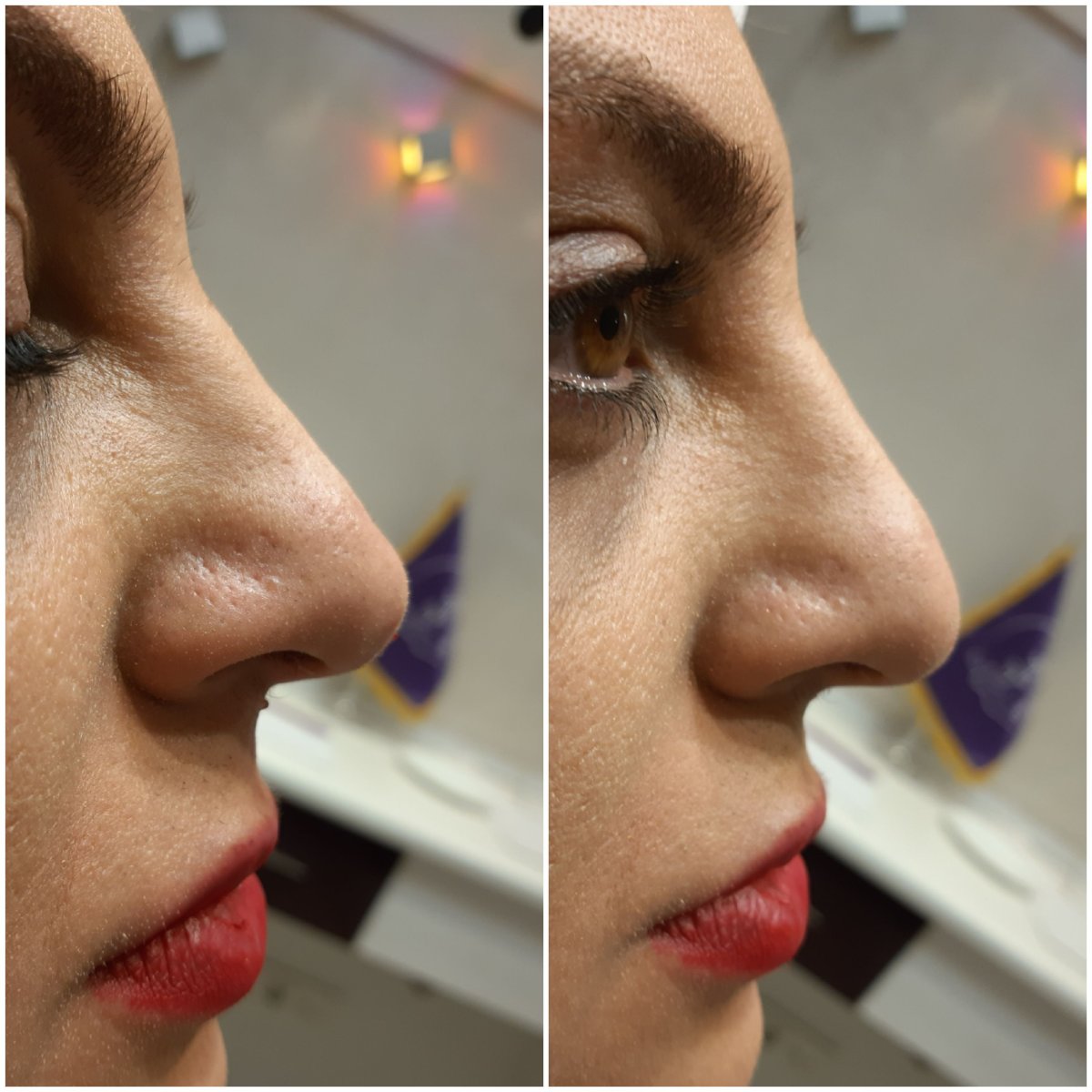
For example, filler may sometimes make a small bump look less noticeable by adding volume around it. The bump has not been removed; the surrounding contour has been changed to create a smoother visual line.
A good consultation should clearly distinguish between what filler can change visually and what it cannot change structurally.
2. What Can Nose Filler Not Fix?
This may be one of the most useful questions you ask.
Nose filler generally cannot:
- physically reduce the overall size of the nose
- remove a large nasal hump
- significantly narrow wide nasal bones
- permanently reshape nasal bone or cartilage
- correct a deviated septum
- treat breathing difficulties
- replace rhinoplasty when significant structural change is required
Because filler adds volume, trying to camouflage a nose that already feels too large may sometimes make it look more prominent from certain angles.
If the result you want cannot realistically be achieved with filler, hearing “nose filler may not be your best option” is valuable information, not a failed consultation.
3. How Much Experience Do You Have with Nose Filler Specifically?
Experience with dermal fillers in general is not necessarily the same as experience treating the nose.
Ask questions such as:
- How often do you perform nose filler treatments?
- What training have you received in facial and nasal anatomy?
- How do you assess vascular risk?
- Are there noses you would not treat with filler?
- How do you approach patients who have had previous rhinoplasty?
- What happens when a patient's anatomy makes filler unsuitable?
The nose requires a detailed understanding of anatomy and careful treatment planning. You should feel comfortable asking about the practitioner's relevant experience.
That is not being difficult. It is part of making an informed decision.
4. What Are You Assessing When You Look at My Nose?
A meaningful nose filler consultation should involve more than looking at your side profile for a few seconds.
Assessment may include:
- bridge height and contour
- tip shape
- skin thickness
- visible asymmetry
- previous filler
- previous nasal surgery
- scar tissue
- forehead-to-nose transition
- chin and lip projection
- facial proportions
- the appearance of the nose from different angles
A change that improves your profile may affect how the bridge looks from the front.
Your nose should therefore be considered as part of your three-dimensional facial structure, rather than as an isolated feature.
The goal should not be to reproduce someone else's nose from a reference photo. It should be to determine what type of change makes sense for your own proportions.
A truly individualized result can feel almost price less because its value comes from being unique to your face rather than copied from someone else's features.
5. Which Filler Are You Planning to Use, and Why?
Ask what product is being proposed.
Useful questions include:
- What is the name of the filler?
- Is it a hyaluronic acid filler?
- Why is this product appropriate for the treatment plan?
- Is the product authorized for sale in Canada?
- Can I see the original packaging?
- What characteristics make you choose it for this area?
Product selection should be intentional.
However, do not evaluate treatment based on the brand name alone. The product is only one part of the equation.
Patient assessment, anatomy, injection technique, product placement and complication management all matter.
6. How Much Filler Do You Think I Need?
More filler does not automatically mean a better result.
This is especially important with the nose because filler adds volume to an already prominent facial feature.
Rather than focusing only on syringe count, ask:
“What is the minimum amount you believe is appropriate for the change we discussed?”
A conservative approach may sometimes make more sense than trying to create a dramatic transformation during one appointment.
You can also ask why a particular amount is being recommended. Treatment should be based on your anatomy and goals rather than automatically applying the same package to every person.
Considering Nose Filler? Start With the Right Assessment
Every nose is different, and the right treatment plan depends on your anatomy, proportions, previous treatments, and the change you want to achieve. If you are considering nose filler, learn more about nose filler treatment at Amazing New Face and what may be discussed during your consultation.
7. What Will the Result Look Like from the Front?
Social media often focuses heavily on dramatic side-profile before-and-after photos.
But you do not experience your face only from the side.
Ask how the proposed treatment may affect:
- your front view
- your three-quarter view
- photographs
- video
- your appearance while talking or smiling
Adding volume to straighten a profile, for example, may influence how prominent or wide the bridge appears from the front.
That does not necessarily mean the treatment is unsuitable. It means you should understand the potential trade-offs before proceeding.
8. What Side Effects Should I Expect?
Common reactions following dermal filler injections can include swelling, tenderness, bruising, redness and temporary discomfort. Health Canada also lists potential complications including infection, nodules, allergic reactions, skin discoloration and improper placement.
Ask two separate questions:
“What should I normally expect after treatment?”
and:
“What symptoms would concern you?”
You should leave knowing the difference between expected temporary reactions and symptoms that require prompt professional assessment.
9. What Is Vascular Occlusion?
A vascular occlusion occurs when blood flow through a blood vessel becomes blocked.
Although vascular complications from dermal filler are uncommon, they can be serious. The FDA identifies unintended injection into a blood vessel as the most concerning risk associated with dermal fillers because impaired blood supply can potentially result in tissue injury, vision abnormalities including blindness, or stroke.
You do not need to become an anatomy expert before treatment.
Your practitioner does.
Ask:
- What symptoms would concern you?
- What should I watch for after leaving the clinic?
- Who should I contact if something feels wrong?
- How quickly would I need to be assessed?
The FDA advises patients to seek immediate medical attention for symptoms such as unusual pain, vision changes, abnormal white, grey or blue skin colour near an injection site, or symptoms suggestive of stroke.
10. What Is Your Emergency Plan if a Complication Happens?
A reassuring answer should be more detailed than:
“Don't worry. That never happens.”
Rare complications are still possible complications.
Ask how the clinic identifies and manages suspected vascular problems, who is available if a concern develops after your appointment, and what referral or emergency procedures are in place.
If a hyaluronic acid filler is being considered, you can also ask about the clinic's protocol for hyaluronidase, an enzyme that can be used to break down HA filler in appropriate circumstances.
The purpose of asking about emergency preparation is not to make treatment frightening.
It is to determine whether risk is being taken seriously.
11. Can the Filler Be Dissolved if I Do Not Like the Result?
Hyaluronic acid filler can often be reduced or dissolved using hyaluronidase.
However, dissolving should not be treated as an effortless “undo button.”
It is another procedure that requires appropriate assessment and treatment planning.
Ask:
- Is the proposed product hyaluronic acid?
- Can this particular filler be dissolved?
- When would you recommend dissolving?
- How would you manage an aesthetic concern differently from an urgent complication?
Different filler materials behave differently, so knowing exactly what has been injected is important.
12. Does Previous Nose Filler or Rhinoplasty Matter?
Always tell your practitioner about previous nasal treatments, even if they happened years ago.
Mention:
- previous nose filler
- rhinoplasty
- revision rhinoplasty
- nasal injuries
- thread treatments
- other injectable procedures around the nose
Surgery, scar tissue and previous treatment can alter anatomy and may make assessment or treatment more complex.
Your treatment history helps the practitioner understand what may be beneath the skin rather than evaluating only what is visible externally.
13. Do My Medical Conditions, Medications or Allergies Matter?
Yes.
A nose filler consultation should include an appropriate medical history.
Tell your practitioner about relevant allergies, previous reactions to fillers or anaesthetic, medications, bleeding concerns, active skin infection or inflammation, medical conditions, previous procedures, and pregnancy or breastfeeding where relevant.
Importantly, do not stop prescribed medication on your own simply because you are planning cosmetic treatment.
Medication-related decisions should be discussed with the appropriate healthcare professional.
14. How Long Might My Nose Filler Last?
There is no exact duration that applies to every person.
Longevity can be affected by:
- the filler used
- product placement
- amount injected
- anatomy
- individual biological factors
- previous treatments
- how the result is being evaluated
You should therefore be cautious of guarantees such as:
“Your filler will definitely last exactly 18 months.”
A more responsible discussion provides an expected range while explaining that individual results vary.
For a deeper explanation, read our guide to how long non-surgical nose filler may last.
15. What Happens if I Keep Adding Filler Over Time?
Maintenance should not automatically mean receiving the same amount of filler every time a particular number of months has passed.
Your nose should be reassessed before repeat treatment.
Depending on what remains and how your anatomy currently looks, the appropriate recommendation could be:
- a small adjustment
- waiting longer
- changing the treatment plan
- addressing existing filler
- or adding nothing
More treatment is not automatically better treatment.
If you are concerned about repeated filler or over-treatment, it can also be helpful to understand the broader signs of too much facial filler before scheduling another session.
16. What Will Aftercare and Follow-Up Look Like?
Before treatment, ask what happens afterward.
You should understand:
- how normal swelling or tenderness should be managed
- what activities may temporarily need to be avoided
- when exercise can resume
- whether pressure from glasses matters in your situation
- when your result should be reassessed
- how to contact the clinic if you have concerns
Aftercare can vary according to the product, technique and individual treatment.
Follow the instructions provided specifically for you rather than relying entirely on social media, online forums or another person's treatment experience.
A good treatment plan includes follow-up, not just the injection appointment.
Should You Bring Inspiration Photos to a Nose Filler Consultation?
Yes, but use them as communication tools rather than instructions.
A reference photo may help explain that you prefer:
- a straighter-looking bridge
- softer contours
- more definition
- a subtle rather than dramatic change
But another person's nose exists within an entirely different facial structure.
Instead of saying:
“Make my nose exactly like hers.”
try:
“I like how subtle and balanced her profile looks. Is that type of effect realistic with my anatomy?”
That creates a much more useful conversation.
Nose Filler or Surgical Rhinoplasty: Which Should You Discuss?
The answer depends largely on what you want to change.
Nose filler may be worth discussing when:
You want a temporary, relatively subtle contour change that can potentially be created by adding volume.
Surgical rhinoplasty may deserve consideration when:
You want to:
- physically reduce nose size
- substantially narrow or reshape the nose
- remove significant structural prominence
- make major permanent structural changes
- address certain functional or breathing concerns
Surgery can alter bone and cartilage. Filler works mainly by changing contour through added volume.
A trustworthy consultation should help you understand the difference rather than presenting filler as the answer to every concern.
Red Flags During a Nose Filler Consultation
Consider slowing down before proceeding if:
- your consultation feels rushed
- nobody asks about your medical history
- previous filler or surgery is ignored
- the practitioner will not identify the product
- important risks are not discussed
- serious complications are described as impossible
- you feel pressured to have treatment immediately
- an identical result to someone else's photo is promised
- additional filler is recommended without a clear reason
- there is no emergency or follow-up process
- unrealistic goals are never challenged
Cosmetic treatment is optional.
You should have enough information and enough space to make your own decision.
How Do You Know if You Had a Good Nose Filler Consultation?
By the end of the consultation, you should understand five things:
- What filler may realistically improve
- What it cannot achieve
- What product and treatment plan are being proposed
- What the important risks are
- What happens if you experience a concern or decide not to proceed
A consultation that leads you to wait, change the plan or choose another option has not necessarily failed.
Sometimes that is exactly what a good consultation is supposed to do.
Thinking About Nose Filler in Thornhill or Whitby?
The first step should be understanding what is realistically possible for your own facial anatomy, not choosing a treatment based only on a before-and-after photo. Explore nose filler treatment at Amazing New Face to learn more about treatment considerations and consultation options in Thornhill and Whitby.
Frequently Asked Questions About Nose Filler Consultations
Can I Get Nose Filler on the Same Day as My Consultation?
In some circumstances, consultation and treatment may occur during the same visit. However, you should never feel pressured to proceed immediately. Your anatomy, medical history, previous procedures, expectations and suitability should be reviewed first. If you want additional time to consider the risks, alternatives or proposed result, it is reasonable to wait.
Can Nose Filler Make My Nose Smaller?
No. Dermal filler adds volume rather than removing nasal tissue. Strategic placement may sometimes make a small bump less noticeable or create the visual impression of a straighter profile, but the nose itself has not been physically reduced.
Is Nose Filler Permanent?
Most commonly used hyaluronic acid fillers are temporary. How long a visible result lasts varies according to the product, placement, anatomy and individual factors. Your consultation should provide a realistic range rather than guarantee an exact duration.
Can Nose Filler Be Dissolved?
Hyaluronic acid filler can often be reduced using hyaluronidase, but dissolving is still a medical procedure requiring appropriate assessment. Not every filler material can be treated in the same way, which is another reason to know exactly what product is being used.
Is Nose Filler Safe?
No injectable cosmetic treatment is completely risk-free. Common temporary reactions can occur, while uncommon vascular complications can be serious. Appropriate patient selection, detailed anatomical knowledge, careful technique and an established emergency protocol are therefore important.
Final Thoughts: A Good Consultation Should Give You Clarity
Before treatment, do not evaluate nose filler cost without also considering your anatomy, treatment plan, product, and practitioner experience.
Ask about your anatomy.
Ask what filler cannot achieve.
Ask about the product.
Ask about experience.
Ask about vascular complications.
Ask what happens in an emergency.
And most importantly, ask whether filler is genuinely the right way to achieve the change you want.
The best aesthetic decision is not always saying yes to treatment.
Sometimes it means adjusting the plan. Sometimes another option makes more sense. And sometimes the most appropriate choice is to do nothing right now.
A thoughtful nose filler consultation gives you enough information to make that decision with confidence.
Nose Filler Consultation at Amazing New Face
If you are considering nose filler treatment, your consultation should focus on your facial proportions, anatomy, treatment history and personal goals rather than following a standard template.
Amazing New Face provides aesthetic treatments at its Thornhill and Whitby clinics, with nose filler among the treatments offered at both locations.
Treatments at Amazing New Face are led by Alireza Hashemnejad, a graduate of Tehran University of Medical Sciences with more than 20 years of experience in aesthetics, including dermal fillers and other non-surgical treatments.
The purpose of a consultation should be to determine whether nose filler makes sense for your anatomy, goals, expectations and treatment history, not to convince you that treatment is necessary.
Schedule a consultation with Amazing New Face to discuss your concerns, review your treatment options, understand the proposed approach and potential risks, and receive personalized guidance before deciding whether nose filler is right for you.
