
Amazing New Face Blog
Nose Filler in Thornhill: What to Know Before Your First Appointment
Hits: 108
If you have ever looked at your side profile and thought, “I like my nose, but I wish this one area looked a little smoother,” you are not alone.
Nose filler has become a popular option for people who want subtle changes without surgery. But it is important to understand what the treatment actually does before deciding whether it is right for you.
Nose filler is not simply a faster or easier version of rhinoplasty. It works differently, has clear limitations, and because the nose has complex vascular anatomy, choosing an appropriately qualified and experienced injector matters.
If you are considering nose filler in Thornhill, your first step should not be deciding how much filler you want. It should be understanding your anatomy, the change you are hoping to achieve, the realistic limits of filler, and how your provider approaches safety.
Quick Answer: What Is Nose Filler?
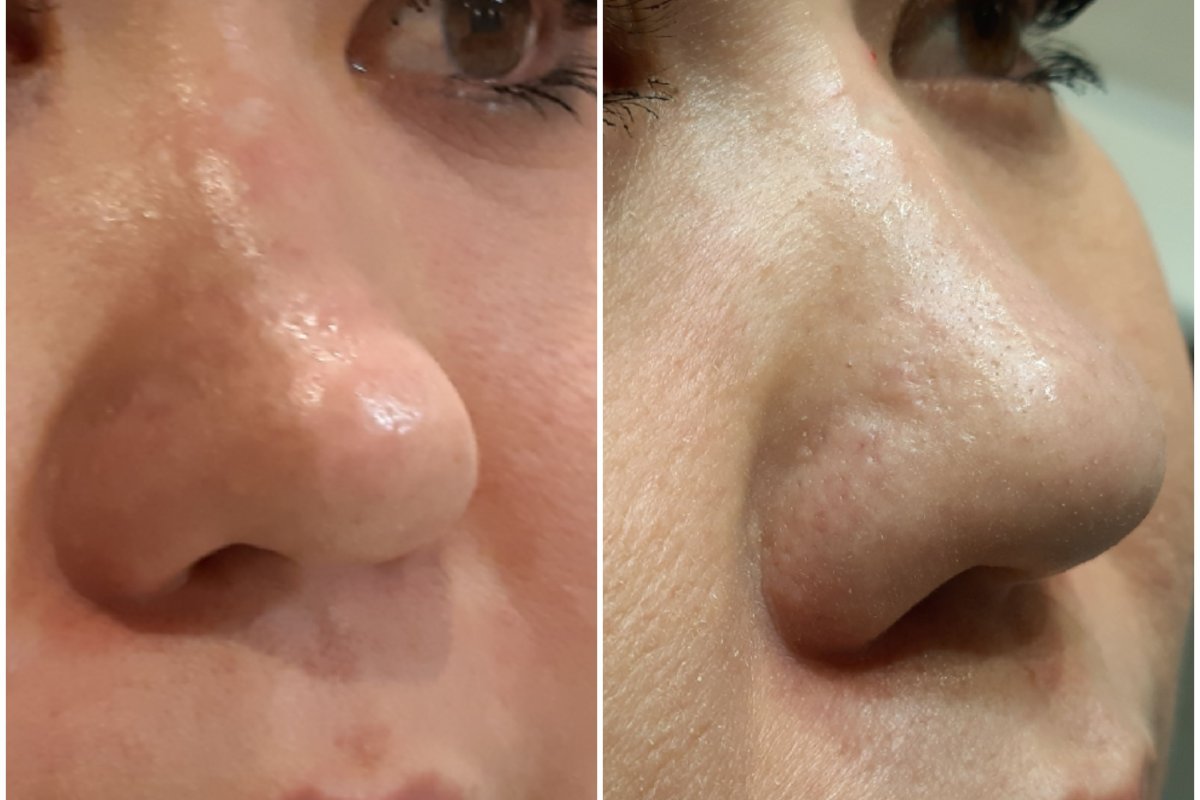
Nose filler, often called non-surgical rhinoplasty or a liquid nose job, is a cosmetic treatment that uses injectable dermal filler to alter the visible contours of the nose.
Unlike surgical rhinoplasty, filler does not remove bone, cartilage, or nasal tissue. Instead, it works by adding carefully controlled amounts of volume to selected areas.
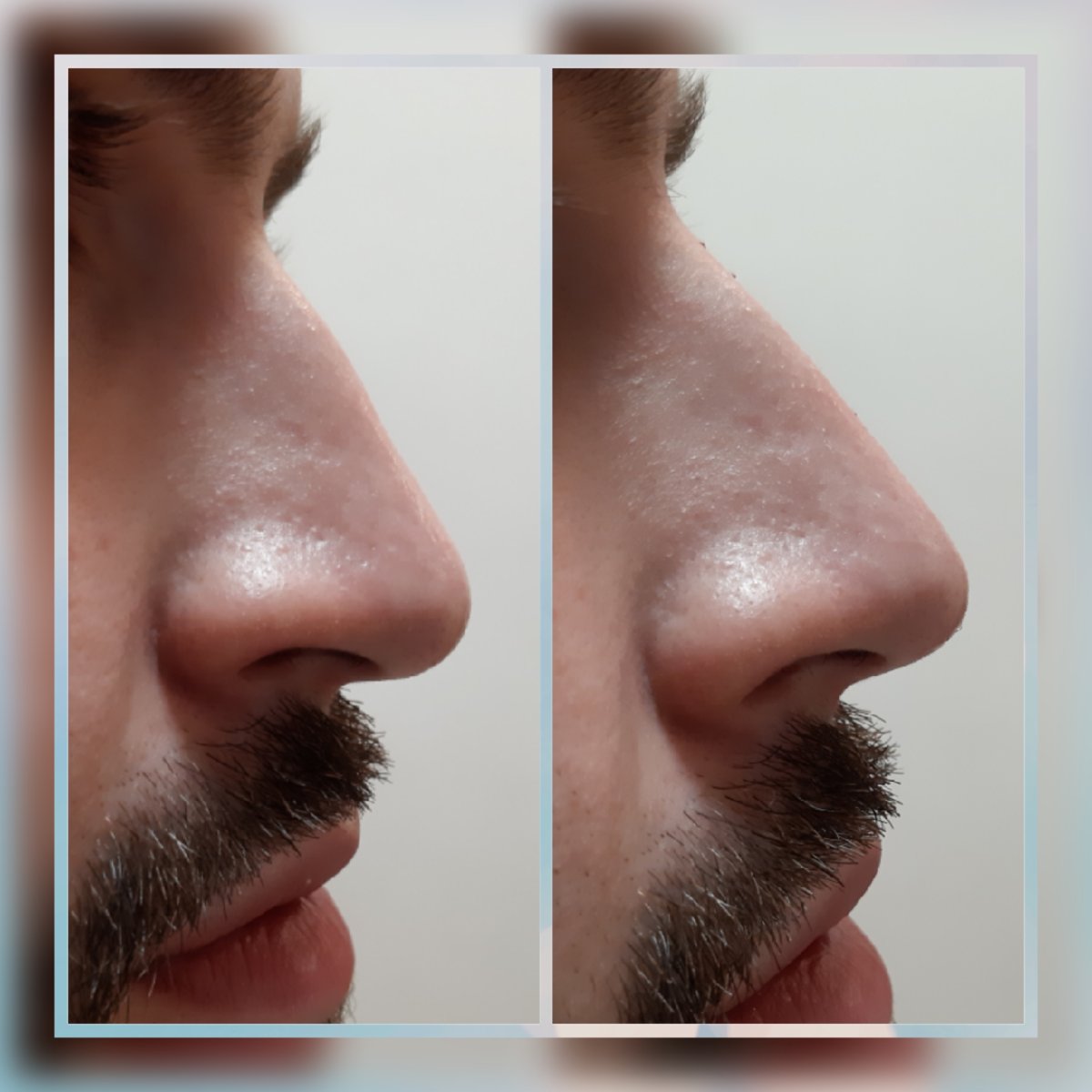
For example, if someone has a mild bump along the bridge, filler may sometimes be placed above or below the bump to create the appearance of a smoother line.
In suitable patients, nose filler may also help improve bridge definition, balance minor irregularities, or create more harmonious proportions between the nose and other facial features.
The key word is subtle.
If your goal is a significantly smaller nose, major structural reshaping, permanent correction, or improvement in breathing problems, filler is unlikely to be the appropriate treatment.
You can learn more about the procedure on our Nose Filler Treatment page.
Can Nose Filler Make Your Nose Look Smaller?
This is one of the most common questions patients ask.
Nose filler cannot physically make the nose smaller because filler adds volume rather than removing tissue.
What it may sometimes do is make the nose appear more balanced.
Imagine a bridge with a small bump. Instead of removing that bump, which would require a surgical approach, filler may be placed around it to create a straighter visual line.
From the side, the profile may therefore appear smoother even though a small amount of volume has actually been added.
That distinction matters.
If your primary concern is substantial nasal width, a large hump, overall nose size, or significant tip reduction, surgical rhinoplasty may better match your goal.
A responsible consultation should determine whether adding volume can genuinely improve your proportions rather than trying to use filler for a concern it cannot solve.
What Can Nose Filler Improve?
Depending on your anatomy and treatment history, nose filler may be considered for concerns such as:
- a mild bump along the nasal bridge
- a low or underdefined bridge
- small contour irregularities
- selected types of asymmetries
- areas that may benefit from additional definition
- subtle profile balancing
The treatment is better understood as contour balancing rather than structural reconstruction.
This is also why two people who show an injector the same reference photo may receive completely different recommendations.
Your existing nasal anatomy, facial proportions, skin and soft tissue, previous filler or surgery, and desired outcome all affect what may be appropriate.
At Amazing New Face, dermal filler treatments are considered in relation to the individual treatment area and facial structure rather than using the same approach for every patient.
What Can Nose Filler Not Fix?
Understanding what filler cannot do is just as important as understanding what it may improve.
Nose filler cannot:
- physically make a large nose smaller
- remove a significant dorsal hump
- substantially reduce nasal width
- correct a deviated septum
- treat nasal obstruction
- correct breathing difficulties
- reproduce the structural changes possible with surgery
In certain noses, adding more volume may actually make the profile appear heavier rather than more refined.
That means one possible outcome of a good consultation is being told that filler is not the best option for your anatomy.
That is not a failed consultation. It is responsible treatment planning.
What Happens During Your First Nose Filler Consultation in Thornhill?
A good consultation should feel more like planning than selling.
If you visit a provider for nose filler in Thornhill, the discussion should begin with what you actually want to change, not with how many syringes you should purchase.
Someone who says, “I want my nose smaller,” may actually be bothered by one particular bump or imbalance in the side profile. Another person may be looking for a dramatic reduction that filler simply cannot provide.
During an assessment, an appropriately qualified provider may:
- examine the nose from several angles
- assess the relationship between the nose and other facial features
- discuss your specific aesthetic goals
- review previous nasal filler or surgery
- discuss relevant medical history and medications
- explain what filler can realistically accomplish
- review potential side effects and complications
- discuss aftercare and expected longevity
- explain what happens if a complication is suspected
If you are considering nose filler in Thornhill, you can book a consultation with Amazing New Face to discuss your goals, anatomy, and whether the treatment is appropriate for you.
Most importantly, you should have an opportunity to ask questions without feeling pressured to proceed immediately.
What Type of Filler Is Commonly Used?
Hyaluronic acid, commonly shortened to HA, is one of the most widely used materials in modern dermal fillers.
Health Canada notes that hyaluronic acid products are commonly used dermal fillers in Canada, and the duration of their effects can vary according to factors including the particular product and treatment circumstances.
One reason HA fillers are often considered for facial contouring is that they may be reduced or dissolved with an enzyme called hyaluronidase when clinically appropriate.
However, this point is sometimes misunderstood online.
“Dissolvable” does not mean “risk-free.”
A filler that can potentially be dissolved still requires appropriate product selection, careful injection technique, anatomical knowledge, patient selection, and rapid recognition of possible complications.
Before your appointment, you can ask your provider:
- What filler are you planning to use?
- Why is this product appropriate for my nose?
- Is it a hyaluronic-acid filler?
- Is this product licensed for sale in Canada?
Health Canada maintains the Medical Devices Active Licence Listing (MDALL), which provides information about licensed Class II, III, and IV medical devices offered for sale in Canada.
Is Nose Filler Safe?
There is no responsible way to answer this question with a simple “yes.”
Dermal fillers are widely used, but every injectable medical procedure involves potential risks.
The nose deserves particular caution because of its vascular anatomy.
More common temporary reactions to dermal filler may include:
- swelling
- bruising
- redness
- tenderness
- pain around the injection area
A much less common but significantly more serious complication is vascular occlusion.
This occurs when blood flow through a vessel becomes compromised. Depending on the vessel and severity, vascular compromise can lead to tissue injury and, in rare circumstances, serious visual complications.
The FDA's dermal filler safety information identifies unintended injection into a blood vessel as one of the most concerning risks of dermal fillers and notes that reported consequences can include tissue necrosis, vision abnormalities including blindness, and stroke.
This is one of the main reasons injector experience and emergency preparedness matter.
You are not simply paying for a syringe of filler. You are relying on someone's judgment about anatomy, candidacy, product choice, placement, complication recognition, and what to do if something does not look right.
Price should therefore never be the only factor when choosing where to have nose filler.
What Warning Signs Should You Know After Nose Filler?
Mild swelling or tenderness after injection does not automatically mean something is wrong.
However, every patient should know that some symptoms require prompt medical assessment.
Seek urgent medical attention if you experience symptoms such as:
- unusual or rapidly increasing pain
- sudden changes in vision
- skin near the treated area becoming unusually pale, white, gray, or blue
- sudden weakness, numbness, difficulty speaking, severe dizziness, facial drooping, or other symptoms that could indicate a neurological emergency
These are not symptoms to simply watch overnight and hope disappear.
Before leaving your appointment, your injector should tell you what normal recovery may look like, which symptoms are concerning, and whom you should contact if you have a problem.
A proper safety conversation should happen before a complication occurs.
How Long Does Nose Filler Last?
There is no single expiration date for nose filler.
The visible effect of HA filler varies according to factors such as:
- the specific product
- the amount and location injected
- individual anatomy
- metabolism
- previous treatments
- the characteristics of the treated tissue
Results should therefore be understood as temporary rather than guaranteed for an exact number of months.
Your provider should discuss the expected longevity of the specific product being considered for you rather than promising identical duration for every patient.
It is also important to remember that immediate does not mean final.
You may notice a contour change soon after treatment, but temporary swelling, tenderness, or minor asymmetry during the early recovery period can affect what you see in the mirror.
Give the area time to settle before making conclusions about the final appearance.
Additional resources
- How Long Do Non-Surgical Nose Jobs Last? The Full Truth About Nose Filler Injections
- The Cost of Nose Fillers in Canada: What You Should Expect to Pay
- 5 Common Myths About Nose Fillers—Busted by Experts
How Should You Prepare for Your Appointment?
You do not need to become an expert in nasal anatomy before your consultation.
You should, however, arrive knowing what you want to discuss.
Ask yourself:
What specifically bothers me?
Is it a small bridge bump?
A lack of definition?
Something that looks uneven from one particular angle?
Or do I actually want my nose substantially smaller?
That last question can completely change which treatment makes sense.
Reference photographs can sometimes help communicate the direction you like, but they should not be treated as templates. Your nose and facial structure are unique.
Make sure your provider knows about:
- previous nose or facial filler
- previous rhinoplasty or other nasal procedures
- medications
- allergies
- relevant medical conditions
- active skin infection or inflammation
- previous complications from injections
Do not stop prescription medication simply because you have a cosmetic appointment. If a medication raises a concern, discuss it with the appropriate healthcare professional.
Pregnancy and breastfeeding should also be discussed during your assessment because safety information for many cosmetic injectable products is limited in these circumstances.
What Should You Ask a Nose Filler Provider in Thornhill?
Convenience matters, but location alone should never decide who injects your nose.
Before choosing a provider for nose filler in Thornhill, consider asking:
What qualifications and training do you have for dermal filler injections?
How much experience do you have specifically with nasal filler?
What product would you recommend for my anatomy, and why?
What result is realistically achievable without making my nose look heavier?
What are the most important risks of this treatment?
What is your protocol if vascular occlusion is suspected?
Are appropriate emergency medication and equipment available?
Who should I contact if I am concerned after treatment?
A trustworthy provider should be able to discuss limitations and risks just as comfortably as potential benefits.
If every concern is answered with another sales pitch, you may want a second opinion.
Nose Filler or Surgical Rhinoplasty: Which Is Better?
Neither treatment is automatically better.
They simply solve different problems.
Nose filler may be appropriate when someone wants temporary, subtle contour refinement and the desired improvement can be created by strategically adding volume.
Surgical rhinoplasty may be more appropriate when the goal involves substantial size reduction, significant structural reshaping, permanent alteration, or functional issues such as breathing difficulty.
The common mistake is treating filler as “rhinoplasty without surgery.”
It is not.
Choosing the procedure that actually matches your concern is more important than choosing whichever option sounds easier or has less downtime.
Why a More Conservative Approach to Nose Filler Makes Sense
The most useful question is not:
“How much filler can we add?”
It is:
“Will adding filler actually improve this person's facial balance?”
More product does not automatically mean a better result.
In some cases, a very small amount may create the desired visual refinement. In others, adding filler may not be appropriate at all.
Good aesthetic treatment should preserve proportion rather than chase dramatic changes simply because they are technically possible.
Sometimes the most refined treatment plan involves using less.
Sometimes it involves choosing surgery.
And sometimes the right recommendation is to do nothing.
What Should You Expect After Treatment?
Your provider should give you aftercare instructions appropriate for the product and treatment performed.
Temporary swelling, tenderness, redness, or bruising may occur.
Unless specifically instructed by your treating professional, avoid trying to reshape, press, or aggressively massage the nose yourself.
If glasses rest heavily on an area that has been injected, ask whether any temporary adjustment is recommended.
Before leaving the clinic, make sure you understand:
- what normal early recovery looks like
- what you should temporarily avoid
- when you should expect the area to settle
- what symptoms require immediate attention
- whom you should contact with concerns
Frequently Asked Questions About Nose Filler in Thornhill
Can nose filler straighten a bump?
In selected cases, nose filler may improve the appearance of a mild bump along the nasal bridge. Instead of removing the bump, filler is carefully placed above or below it to create a smoother visual line. This can make the side profile appear straighter and more balanced. However, filler does not physically remove bone or cartilage. Larger humps or concerns involving substantial structural change may be better addressed with surgical rhinoplasty. An assessment is needed to determine whether filler can realistically achieve the result you want.
Can nose filler make my nose smaller?
Nose filler cannot physically make the nose smaller because dermal filler works by adding volume rather than removing tissue. In some patients, however, strategic placement may improve proportions and create the visual impression of a more balanced or refined nose. For example, smoothing a mild bridge irregularity can make the profile look straighter. If your main goal is a significant reduction in nasal size, width, or projection, filler is unlikely to provide the result you want, and a surgical consultation may be more appropriate.
Can nose filler fix a deviated septum?
No. Nose filler does not correct a deviated septum because it cannot change the internal structures responsible for nasal airflow or obstruction. Dermal filler is primarily used to adjust the visible external contour of the nose. In some situations, filler may make certain external asymmetries appear less noticeable, but this is a cosmetic effect rather than a functional correction. If you experience chronic nasal obstruction, difficulty breathing, or symptoms related to a deviated septum, you should discuss those concerns with an appropriate medical specialist.
Can nose filler be dissolved?
Many nose fillers are made with hyaluronic acid, which can often be reduced or dissolved using an enzyme called hyaluronidase when clinically appropriate. This may be considered if the aesthetic result needs adjustment or if a medical complication requires treatment. However, the fact that a filler can be dissolved does not make the procedure risk-free. Dissolving filler also requires professional judgment. Patients should ask which product is being used, whether it is hyaluronic-acid based, and how the provider manages complications if they occur.
Is nose filler permanent?
Nose filler is generally considered temporary, particularly when hyaluronic-acid fillers are used. How long the visible result lasts can vary considerably between patients and depends on factors such as the specific filler product, the amount injected, individual anatomy, metabolism, previous treatments, and the areas treated. For this reason, responsible providers should avoid promising one exact duration for everyone. Your injector should explain the expected longevity of the specific product recommended for you and discuss when reassessment or future maintenance might reasonably be considered.
How do I know whether I am a good candidate for nose filler?
The best way to determine whether you are a good candidate is through an individual assessment rather than relying on social media photos or before-and-after images. Your provider should consider your nasal anatomy, facial proportions, skin and soft tissue, previous fillers or nasal surgery, medical history, and the specific result you want. Nose filler tends to be better suited to subtle contour refinement rather than major size reduction or structural change. In some cases, the safest and most appropriate recommendation may be not to inject at all.
Is nose filler safe?
Nose filler can be performed safely in appropriately selected patients, but it is not a risk-free procedure. Temporary effects such as swelling, tenderness, redness, or bruising may occur. More serious complications, including vascular occlusion and tissue injury, are uncommon but require rapid recognition and treatment. Because the nose has complex vascular anatomy, injector qualifications, anatomical knowledge, experience, product selection, and emergency preparedness are especially important. Before treatment, ask your provider to explain the major risks and exactly how complications would be managed.
How much nose filler do I need?
There is no standard amount of filler that is appropriate for every nose. The amount depends on your anatomy, treatment goals, previous filler, and the specific areas being addressed. A conservative approach is generally more appropriate than trying to use a predetermined number of syringes. Adding too much volume can make the nose appear heavier rather than more refined. Your consultation should focus first on whether filler can improve your proportions and, only then, on the smallest appropriate amount needed to achieve a realistic result.
What should I expect immediately after nose filler?
After treatment, you may notice an immediate change in the contour of your nose, but the appearance you see right away should not necessarily be considered the final result. Temporary swelling, tenderness, redness, or minor bruising can affect how the area looks during the early recovery period. Your provider should explain what is normal and what symptoms require attention. Avoid pressing, massaging, or attempting to reshape the nose unless specifically instructed to do so, and follow the aftercare guidance provided by your injector.
When should I seek medical attention after nose filler?
Contact your provider promptly or seek urgent medical assessment if you develop symptoms that seem unusual or significantly different from expected swelling and tenderness. Concerning signs can include rapidly increasing or severe pain, sudden vision changes, or skin that becomes unusually pale, white, gray, or blue near the treated area. Neurological symptoms such as facial weakness, difficulty speaking, severe dizziness, or numbness also require urgent assessment. Before leaving your appointment, make sure you know exactly whom to contact if you are concerned after treatment.
The Bottom Line
Nose filler can create noticeable visual refinement using relatively small amounts of strategically placed volume, but a small treatment does not mean a small responsibility.
If you are considering nose filler in Thornhill, start by defining exactly what you want to change.
If your goal involves subtle bridge smoothing, additional definition, or improved visual proportions, non-surgical nasal contouring may be worth discussing.
If you want a substantially smaller nose, major structural changes, a permanent result, or correction of breathing problems, filler is unlikely to deliver what you are looking for.
Most importantly, choose your provider based on appropriate qualifications, experience with nasal injections, realistic treatment planning, product transparency, and a clear safety protocol, not simply price, convenience, or social media popularity.
About Amazing New Face
At Amazing New Face, nose filler treatment begins with an individualized assessment of your nasal anatomy, facial proportions, previous treatments, medical history, and the specific changes you hope to achieve. Led by Dr. Alireza Hashemnejad, the clinic focuses on conservative treatment planning, balanced facial proportions, natural-looking results, and realistic expectations.
If you are considering nose filler, the most important first step is not deciding how much filler you want or choosing treatment based only on price. It is understanding whether adding filler is actually appropriate for your anatomy, what type of improvement can realistically be achieved, and whether a non-surgical approach matches your goals.
Schedule a consultation with Amazing New Face to discuss your concerns, review your treatment options, understand the proposed approach and potential risks, and receive personalized guidance before deciding whether nose filler is right for you.
