
Amazing New Face Blog
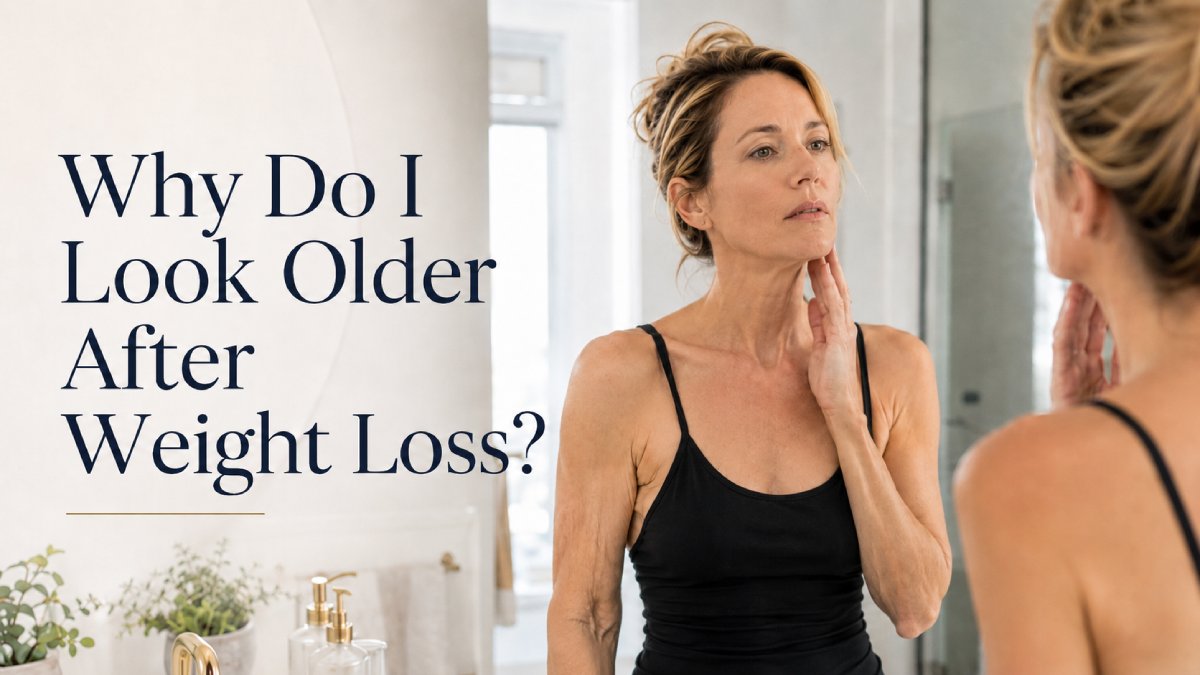
Why Do I Look Older After Weight Loss?
Hits: 239
You did the hard part.
You changed your habits. You lost weight. You worked on your health, your energy, your confidence, and maybe even your relationship with your body.
Then one day, you look in the mirror and think:
“Wait… why do I look older now?”
First, take a breath.
You are not imagining it. You are also not alone.
Many women notice that after weight loss, especially fast or significant weight loss, their face can look more tired, hollow, saggy, or aged. The cheeks may look flatter. The under eyes may look deeper. Smile lines may look stronger. The jawline may feel softer. The neck may look looser.
And that can feel confusing.
Because weight loss is often sold as this magical glow-up. Smaller clothes. More energy. Better health. More confidence. So, when your body feels better but your face looks more tired, it can feel unfair.
But here is the truth.
Weight loss can change your face in beautiful ways. It can reveal bone structure, soften puffiness, and create a more sculpted look. But it can also reduce facial volume and make skin laxity, fine lines, and natural aging more noticeable.
That does not mean you made a mistake.
It means your face is adjusting.
The good news is that looking older after weight loss does not mean you need to rush into dramatic treatments. In many cases, the best approach is small, thoughtful, natural-looking support that helps your face look rested, balanced, and refreshed.
Let’s break down why this happens, what you can do at home, and which non-surgical treatments may help if you want extra support.
Quick Answer: Why Do I Look Older After Weight Loss?
You may look older after weight loss because losing fat can reduce facial volume and support. When the cheeks, temples, under eyes, jawline, and neck lose fullness, the skin may look looser, wrinkles may look deeper, and the face may appear more tired or hollow.
In simple words:
Weight loss changes what is underneath the skin.
When the natural “padding” under the skin decreases, the skin may not sit as smoothly as before. This can make folds, sagging, fine lines, and hollowness more visible.
This is especially common when weight loss is:
- Fast
- Significant
- Repeated over many years
- Happening after the age of thirty-five
- Combined with reduced collagen, sun damage, or hormonal changes
So no, your face is not “ruined.”
It may simply need time, support, and possibly a customized treatment plan.
Why Weight Loss Changes the Face
Think of your face like a sofa.
The fabric is your skin.
The cushioning underneath is facial fat, collagen, elastin, and soft tissue support.
When the cushioning is full and firm, the fabric looks smoother. When the cushioning decreases, the fabric may look looser, folded, or less supported.
That is very similar to what can happen after weight loss.
Your face naturally has fat pads in areas like the cheeks, temples, under eyes, jawline, and around the mouth. These fat pads are not just “extra fat.” They help create youthful curves, softness, and structure.
When you lose weight, you cannot choose exactly where the fat comes from.
Some people lose more from the waist.
Some lose more from the hips.
Some lose more from the face.
For one person, facial weight loss creates a sharper, more sculpted look. For another person, it creates hollowness, sagging, or a tired appearance.
That is why two people can lose the same amount of weight and look completely different afterward.
Genetics, age, skin quality, hormones, lifestyle, weight history, and how quickly the weight came off all play a role.
The Main Reasons You May Look Older After Weight Loss
1. You Lost Facial Volume
Facial volume is one of the biggest reasons the face looks youthful.
Full cheeks, soft temples, gentle under-eye support, and a smooth lower face all help create a rested, fresh appearance.
When facial volume decreases, the face can look:
- More hollow
- More tired
- More angular
- Less soft
- Less lifted
- More drawn
This does not mean a slimmer face is bad. A slimmer face can look elegant, defined, and beautiful.
The problem happens when volume loss becomes uneven or when the skin no longer has enough support underneath.
Common areas affected by facial volume loss include:
- Cheeks
- Temples
- Under eyes
- Nasolabial folds
- Marionette lines
- Jawline
- Chin area
For example, if the mid-face loses support, the lower face can start to look heavier. The cheeks may flatten, which can make smile lines and jowls look more noticeable.
That is why many women say:
“I love my body now, but my face looks tired.”
It is not because your face is failing you.
It is because the balance has changed.
2. Your Skin Did Not Fully Bounce Back
Skin has elasticity, but it is not magic.
When weight increases, the skin stretches. When weight decreases, the skin needs time to retract.
Sometimes it does.
Sometimes it only partially does.
Sometimes it needs help.
How well your skin bounces back depends on several factors, including:
- Age
- Genetics
- How much weight you lost
- How quickly you lost weight
- Sun exposure history
- Smoking history
- Hormonal changes
- Hydration
- Nutrition
- Collagen and elastin levels
If skin laxity is mild, non-surgical skin tightening treatments may help improve firmness over time. If skin laxity is severe, especially after major weight loss, surgery may be a more realistic option.
For the face and neck, many people fall somewhere in the middle.
They do not necessarily need surgery, but they do want more firmness, lift, and skin quality improvement.
3. Collagen and Elastin Decline with Age
Collagen helps skin look firm and smooth.
Elastin helps skin stretch and return to shape.
As we age, both naturally decline. This is one reason skin becomes thinner, looser, and less firm over time.
Weight loss can make that change more obvious.
Imagine a fitted sheet on a mattress. If the mattress becomes smaller and the sheet has lost some elasticity, the sheet may wrinkle or loosen.
The same idea can happen with skin.
When facial volume decreases and the skin already has less collagen and elastin, sagging, crepiness, and fine lines can look more visible.
This is why weight loss at twenty-five may look very different from weight loss at forty-five or fifty-five.
It is not about doing anything wrong.
It is biology.
4. Existing Wrinkles May Look Deeper
Sometimes weight loss does not create brand-new wrinkles.
It reveals wrinkles that were already forming.
Facial fullness can soften the appearance of lines. When that fullness decreases, lines and folds may look stronger.
Common examples include:
- Smile lines
- Marionette lines
- Under-eye lines
- Neck lines
- Forehead lines
- Crow’s feet
- Crepey skin on the neck and chest
This is why some people feel like their skin looked smoother before losing weight.
The skin may not actually be worse. It may simply have less support underneath.
5. Fast Weight Loss Can Be Harder on the Skin
When weight loss happens gradually, the skin may have more time to adjust.
When weight loss happens quickly, the skin may not retract as smoothly.
This is one reason some people notice facial aging after:
- Crash dieting
- Bariatric surgery
- Major lifestyle changes
- Rapid fat loss
- Medication-assisted weight loss
Online, people often use terms like “Ozempic face” to describe a thinner, more hollow-looking face after fast weight loss. But the idea is not really about one medication. It is about rapid or significant facial fat loss.
Again, this does not mean weight loss is bad.
It means the face may need a different kind of support afterward.
6. The Neck and Jawline May Look Softer
The jawline and neck are often two of the first areas where people notice aging after weight loss.
You may see:
- Loose skin under the chin
- Softness along the jawline
- Early jowls
- Neck crepiness
- Vertical neck bands
- Horizontal neck lines
The jawline depends on bone structure, facial fat, collagen, and soft tissue support. When volume shifts or decreases, the lower face may look less defined.
At the same time, skin laxity can make the neck appear older than the rest of the face.
This is why treating only one small area may not always give the best result. A refreshed look often comes from improving balance across the cheeks, jawline, chin, neck, and skin texture.

Is Looking Older After Weight Loss Permanent?
Not always.
Some changes can improve naturally over time, especially if your weight has recently stabilized. Skin can continue adjusting for months after weight loss.
Healthy habits can also support better-looking skin, including:
- Eating enough protein
- Strength training
- Staying hydrated
- Protecting your skin from the sun
- Using supportive skincare
- Avoiding smoking
- Maintaining a stable weight
However, if facial volume loss, skin laxity, or deeper folds are more noticeable, they may not fully reverse on their own.
That is where professional treatments may help.
The goal is not to undo your weight loss.
The goal is to help your face match how good you feel.
What Can You Do at Home First?
Before jumping into treatments, start with the basics.
These habits may not replace professional care, but they can support your skin from the inside and outside.
Eat Enough Protein
Protein supports the body’s repair process and helps maintain muscle.
If you lose weight but do not eat enough protein, your body may look less firm and your skin may appear less resilient.
Good protein sources include:
- Eggs
- Fish
- Chicken
- Greek yogurt
- Tofu
- Lentils
- Beans
- Lean meats
This is not about dieting harder. It is about giving your body the building blocks it needs.
Build Muscle with Strength Training
Strength training can improve the way your body looks after weight loss.
It does not directly tighten facial skin, but it can help your body look firmer, stronger, and less deflated.
For many women, building muscle after weight loss helps create a healthier and more balanced appearance.
Protect Your Skin from the Sun
Sun exposure breaks down collagen and elastin.
If you are already dealing with loose skin, fine lines, or crepey texture after weight loss, sun damage can make these concerns more visible.
Daily sunscreen is one of the simplest and most important anti-aging habits you can start.
Hydrate, But Be Realistic
Hydration helps skin look healthier and less dull.
But water alone will not restore lost facial volume or tighten loose skin.
Think of hydration as support, not a full solution.
Use Skincare That Supports the Skin Barrier
A gentle skincare routine can make a big difference in how your skin looks and feels.
Helpful ingredients may include:
- Sunscreen
- Retinol or retinoids, if tolerated
- Vitamin C
- Peptides
- Hyaluronic acid
- Ceramides
- Gentle moisturizers
Avoid over-exfoliating. Skin that is already thin, dry, or crepey can look worse when the barrier is irritated.
Which Treatment Helps Which Concern?
Here is a simple guide.
|
If you notice this |
Possible cause |
Treatment options to discuss |
|
Hollow cheeks or tired-looking face |
Facial volume loss |
Dermal fillers, skin boosters, PRP |
|
Sagging jawline or loose neck |
Skin laxity and collagen loss |
HIFU, RF microneedling |
|
Crepey skin or rough texture |
Collagen and elastin decline |
RF microneedling, PRP, skin boosters |
|
Deeper smile lines |
Volume loss and skin laxity |
Cheek filler, dermal fillers, HIFU |
|
Under-eye hollows |
Volume loss and thin skin |
Under-eye filler, PRP, skin boosters |
|
Fine expression lines |
Repeated muscle movement |
Botox |
|
Severe excess skin |
Significant laxity |
Surgical consultation may be more realistic |
There is no one “best” treatment for everyone.
The right option depends on what changed in your face.
If You Lost Facial Volume: Dermal Fillers May Help
If your face looks hollow, flat, tired, or less supported after weight loss, dermal fillers may help restore volume in a natural-looking way.
Dermal fillers are commonly used to support areas such as:
- Cheeks
- Temples
- Under eyes
- Nasolabial folds
- Marionette lines
- Jawline
- Chin
The goal is not to make the face look puffy or overfilled.
The goal is to replace support where volume has been lost.
After weight loss, cheek filler can be especially helpful because the mid-face supports many other areas. When the cheeks lose volume, the lower face may look heavier and smile lines may appear deeper.
Restoring gentle cheek support can sometimes make the face look fresher without filling every single line.
The best filler results after weight loss are usually conservative, balanced, and customized to your natural anatomy.
You should still look like you.
Just more rested.
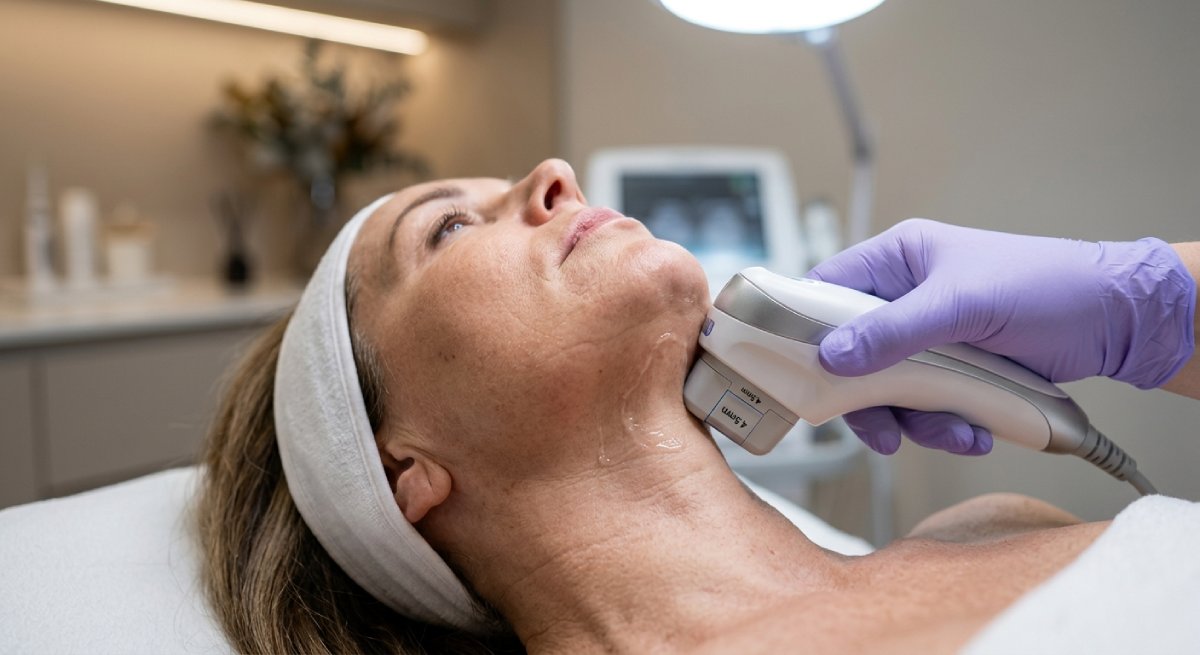
If Your Skin Looks Loose: HIFU May Help with Firmness
If your main concern is loose skin around the lower face, jawline, chin, or neck, HIFU may be worth discussing.
HIFU stands for High-Intensity Focused Ultrasound. It uses focused ultrasound energy to heat deeper layers of the skin and support collagen remodeling.
Over time, this can help the skin look firmer and more lifted.
HIFU is commonly considered for:
- Mild to moderate sagging
- Lower face laxity
- Jawline softness
- Loose skin under the chin
- Neck laxity
- Early jowls
HIFU is not the same as filler.
It does not replace lost facial volume. It focuses more on tightening and lifting.
This is why some people benefit from a combination plan. For example, HIFU may help with skin laxity, while fillers may restore facial structure.
If Your Skin Looks Crepey or Textured: RF Microneedling May Help
RF microneedling can be helpful when the skin looks thin, crepey, uneven, or less firm after weight loss.
This treatment combines microneedling with radiofrequency energy. The microneedles create controlled micro-injuries in the skin, while RF energy delivers heat into deeper layers.
This process supports collagen and elastin remodeling.
RF microneedling is often used for:
- Fine lines
- Crepey skin
- Uneven texture
- Acne scars
- Mild skin laxity
- Neck texture
- Lower face firmness
It is especially useful when the concern is not only sagging, but overall skin quality.
For example, if your neck looks thinner and more wrinkled after weight loss, RF microneedling may help improve texture and firmness gradually.
If Your Skin Looks Dull or Dehydrated: Skin Boosters May Help
Sometimes the face does not look older because of sagging alone.
It may look dull, dry, tired, or less glowy.
Skin boosters are designed to improve hydration and skin quality from within the skin. They are not the same as traditional fillers. They usually do not create dramatic volume or contour.
Instead, they help the skin look smoother, plumper, and more refreshed.
Skin boosters may help with:
- Dehydrated-looking skin
- Fine lines
- Dullness
- Crepey texture
- Loss of glow
- Tired-looking skin after weight loss
This can be a good option for someone who says:
“I do not want to change my face. I just want my skin to look healthier.”
If Expression Lines Look Deeper: Botox May Help
Botox does not tighten loose skin or restore lost volume.
But it can help soften expression lines that may look more noticeable after weight loss.
Botox is commonly used for:
- Frown lines
- Forehead lines
- Crow’s feet
- Bunny lines
- Chin dimpling
- Neck bands in selected cases
After weight loss, the face may appear more lined because the skin has less fullness underneath. Botox can help relax certain muscles that create dynamic wrinkles, which are wrinkles caused by repeated facial movement.
The key is moderation.
A natural Botox result should make you look relaxed, not frozen.
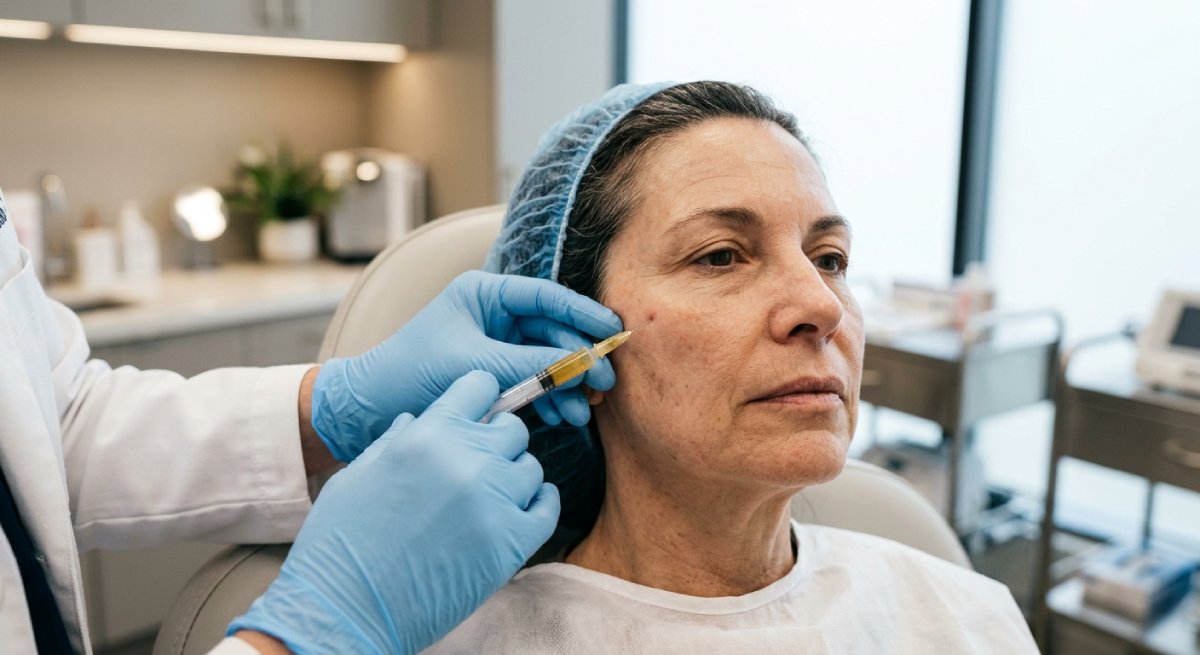
If You Want Gradual Skin Renewal: PRP May Be an Option
PRP stands for Platelet-Rich Plasma.
It uses a concentrated portion of your own blood that contains growth factors. In aesthetic medicine, PRP is often used to support skin rejuvenation, texture, and overall skin quality.
PRP may be considered for:
- Dull skin
- Fine lines
- Under-eye texture
- Mild crepiness
- Skin quality support
- Hair thinning, if relevant
PRP is not a filler and it does not create instant volume like dermal fillers.
It is more of a gradual, regenerative treatment.
For someone who wants a subtle and natural approach, PRP may fit well into a post-weight-loss skin plan.
If You Have Significant Excess Skin: Surgery May Be More Realistic
This is important to say honestly.
Non-surgical treatments can help with mild to moderate laxity, texture, collagen support, and early sagging.
But if you have a large amount of loose skin, especially after major weight loss, non-surgical treatments may not give the level of correction you want.
In those cases, surgical body contouring or facial surgery may be more appropriate.
That does not mean you have to choose surgery.
It simply means expectations matter.
A trustworthy clinic should never promise that a non-surgical treatment can do what surgery does.
For the face and neck, a consultation can help determine whether non-surgical options are enough or whether a surgical opinion may be better.
What Should You Treat First After Weight Loss?
If you are not sure where to begin, start with the concern that bothers you the most.
Here is a simple guide:
If you look tired
Look at volume loss, under eyes, skin hydration, and skin quality.
If you look saggy
Look at the jawline, neck, cheeks, and collagen support.
If you look hollow
Look at the cheeks, temples, and under-eye support.
If you look wrinkled
Look at skin quality, Botox options, and volume support.
If you look dull
Look at hydration, skincare, skin boosters, and PRP.
The face is connected.
Sometimes treating the cheeks can improve the appearance of the under-eye area. Sometimes improving the jawline can make the neck look better. Sometimes skin boosters can make the skin look healthier without changing the shape of the face.
This is why consultation matters.
You may not need “more treatment.”
You may just need the right treatment in the right order.
How Long Should You Wait After Weight Loss Before Treatment?
If your weight is still changing quickly, it may be better to wait until things stabilize before doing certain treatments, especially fillers or body contouring treatments.
A stable weight gives your provider a clearer picture of your natural facial structure and skin laxity.
That said, you do not always have to wait forever.
Some skin-quality treatments, such as microneedling, RF microneedling, PRP, or skin boosters, may be considered earlier depending on your goals and your provider’s assessment.
For facial balancing with fillers, it is often best to wait until your weight is more stable so the results can be planned properly.
Will Fillers Make Me Look Puffy After Weight Loss?
Not when they are done thoughtfully.
The fear of looking puffy is very real. Many women worry that fillers will make them look unlike themselves.
This usually happens when too much product is used, the wrong area is treated, or the face is not assessed as a whole.
After weight loss, the goal should not be to “fill everything.”
The goal should be to restore strategic support.
A conservative plan may include small amounts in the cheeks, temples, jawline, chin, or under-eye area depending on your anatomy.
Natural-looking filler should make people think you look rested, not injected.
Can Skin Tightening Replace a Facelift?
No.
Non-surgical skin tightening is not the same as a facelift.
Treatments like HIFU and RF microneedling can help improve mild to moderate laxity and support collagen remodeling. But they cannot remove large amounts of excess skin or reposition deeper tissue the way surgery can.
This does not make them bad treatments.
It just means they have limits.
For many women, non-surgical treatments are appealing because they offer gradual improvement, less downtime, and a more subtle result. But the right choice depends on your level of laxity and your expectations.
A good provider should be honest about what is realistic.
Additional resources
- The Best Fillers for Under-Eye Hollowing: What Works and What Doesn’t
- Where to Get Natural‑Looking Botox in Toronto: A Complete Guide for Real Women
- Frequently Asked Questions About HIFU Therapy
- Which Whitby Clinic Uses HIFU, Microneedling, and PRP-all Under One Roof?
How to Avoid Looking Overdone
Post-weight-loss rejuvenation should be about harmony.
The biggest mistake is chasing every line or hollow separately. That can lead to overfilling, imbalance, or a face that looks different instead of refreshed.
A better approach is:
- Start with a full-face assessment
- Treat structure before tiny details
- Support collagen and skin quality
- Use conservative amounts
- Give results time to develop
- Maintain, do not overcorrect
The best aesthetic work often looks quiet.
You still look like you.
Just fresher, softer, and more rested.
When Should You Book a Consultation?
Consider booking a consultation if:
- You lost weight and your face looks tired or hollow
- Your skin feels looser than before
- Your jawline or neck has changed
- You’re under eyes look deeper
- Your smile lines look more noticeable
- Your skin looks dull or crepey
- You are unsure which treatment makes sense
- You want natural-looking improvement, not a dramatic change
A consultation does not mean you are committing to treatment.
It is a chance to understand what is happening, what your options are, and what is realistic for your face.
At Amazing New Face, the goal is to help you make informed, comfortable decisions. You should never feel rushed, pressured, or confused.
FAQs
Why does my face look older after losing weight?
Your face may look older after weight loss because losing fat can reduce facial volume and support. When the cheeks, temples, and under-eye areas lose fullness, wrinkles, folds, hollows, and sagging can become more visible. Skin may also not bounce back fully, especially if collagen and elastin have declined with age. This can make the face look tired even when the body feels healthier.
Can weight loss cause sagging skin on the face?
Yes, weight loss can contribute to sagging skin on the face, especially after significant or fast weight loss. When facial fat decreases, the skin has less support underneath. If the skin has reduced elasticity, it may appear looser around the cheeks, jawline, chin, and neck. Mild to moderate laxity may improve with time or non-surgical treatments, but severe excess skin may need a surgical opinion.
What is the best treatment for facial aging after weight loss?
The best treatment depends on the main concern. Dermal fillers may help restore lost facial volume. HIFU may help tighten mild to moderate sagging. RF microneedling may improve crepey texture, fine lines, and firmness. Botox may soften expression lines. Skin boosters and PRP may improve hydration, glow, and skin quality. Many people benefit from a customized combination plan.
Will my skin tighten naturally after weight loss?
Sometimes skin tightens naturally after weight loss, especially if the weight loss was gradual and the skin still has good elasticity. However, if there is significant laxity, reduced collagen, sun damage, or major volume loss, the skin may not fully tighten on its own. Healthy habits can help support the skin, but professional treatments may be needed for visible firmness and texture improvement.
How long should I wait after weight loss before getting fillers?
It is usually best to wait until your weight is relatively stable before getting fillers. This helps your provider assess your facial structure more accurately and create a balanced plan. If your weight is still changing quickly, your face may continue to change too. Skin-quality treatments may sometimes be started earlier, depending on your goals and your provider’s assessment.
Can HIFU help after weight loss?
HIFU may help with mild to moderate skin laxity after weight loss, especially around the jawline, lower face, chin, and neck. It supports collagen remodeling and gradual tightening. However, HIFU does not replace lost facial volume and may not be enough for severe excess skin. It is often best used when the main concern is firmness, not hollowness.
Is RF microneedling good for loose skin after weight loss?
RF microneedling may help improve skin texture, fine lines, crepiness, and mild laxity after weight loss. It is especially useful when the skin looks thin, uneven, or less firm. Results usually develop gradually as collagen and elastin remodeling occurs. It may be considered for the face, neck, and other areas depending on skin condition and treatment goals.
Do fillers fix loose skin after weight loss?
Fillers do not directly tighten loose skin. They restore volume and support in areas that have become hollow or flat. In some cases, restoring volume can make the skin look smoother and more lifted. However, if the main issue is skin laxity, treatments like HIFU or RF microneedling may be more appropriate. A consultation can help identify whether volume loss, laxity, or both are present.
Why do me under eyes look worse after weight loss?
The under-eye area may look worse after weight loss because facial volume loss can make hollows, shadows, and tear troughs more visible. The skin under the eyes is thin, so even small changes in support can make the area look tired. Depending on the cause, treatment options may include under-eye filler, PRP, skin boosters, or skin-quality treatments.
Can I look younger again after weight loss?
Yes, many people can achieve a fresher and more balanced look after weight loss with the right plan. The goal is not to erase every line or change your face. The goal is to restore support, improve skin quality, soften visible aging signs, and help your face match the healthier, more confident version of you
Final Thoughts: You Did Not Lose Your Beauty
If you look older after weight loss, it can feel emotionally confusing.
You may feel proud of your progress, but disappointed that your face does not reflect how strong and healthy you feel.
That feeling is valid.
But remember this:
Your face is not failing you.
Your skin and facial structure are simply adjusting to change.
Weight loss can reveal volume loss, skin laxity, and natural aging, but there are many ways to support your skin and restore balance.
Sometimes that means skincare and patience.
Sometimes it means collagen-stimulating treatments.
Sometimes it means subtle volume restoration.
Sometimes it means combining treatments in a careful and natural-looking way.
You do not need to chase a younger version of yourself.
You can simply help your face look rested, supported, and in harmony with the way you feel now.
About Amazing New Face
At Amazing New Face, we help clients understand their aesthetic options with clarity, comfort, and honest guidance.
Our treatments are led by Alireza Hashemnejad, a graduate of Tehran University of Medical Sciences with over 20 years of experience in cosmetic and non-surgical aesthetic procedures, including dermal fillers, Botox, HIFU, PRP, RF microneedling, skin boosters, and facial rejuvenation treatments.
If weight loss has left your face looking tired, hollow, saggy, or less firm, we can help you explore personalized options to restore balance and freshness without making you look overdone.
With clinic locations in Thornhill and Whitby, we proudly serve clients across Toronto and the GTA, including Richmond Hill, North York, Markham, Pickering, Ajax, and surrounding areas.
Not ready to visit the clinic yet?
You can
Book a consultation with Amazing New Face and discover which treatment may be right for your face, skin, and confidence.
