
Amazing New Face Blog
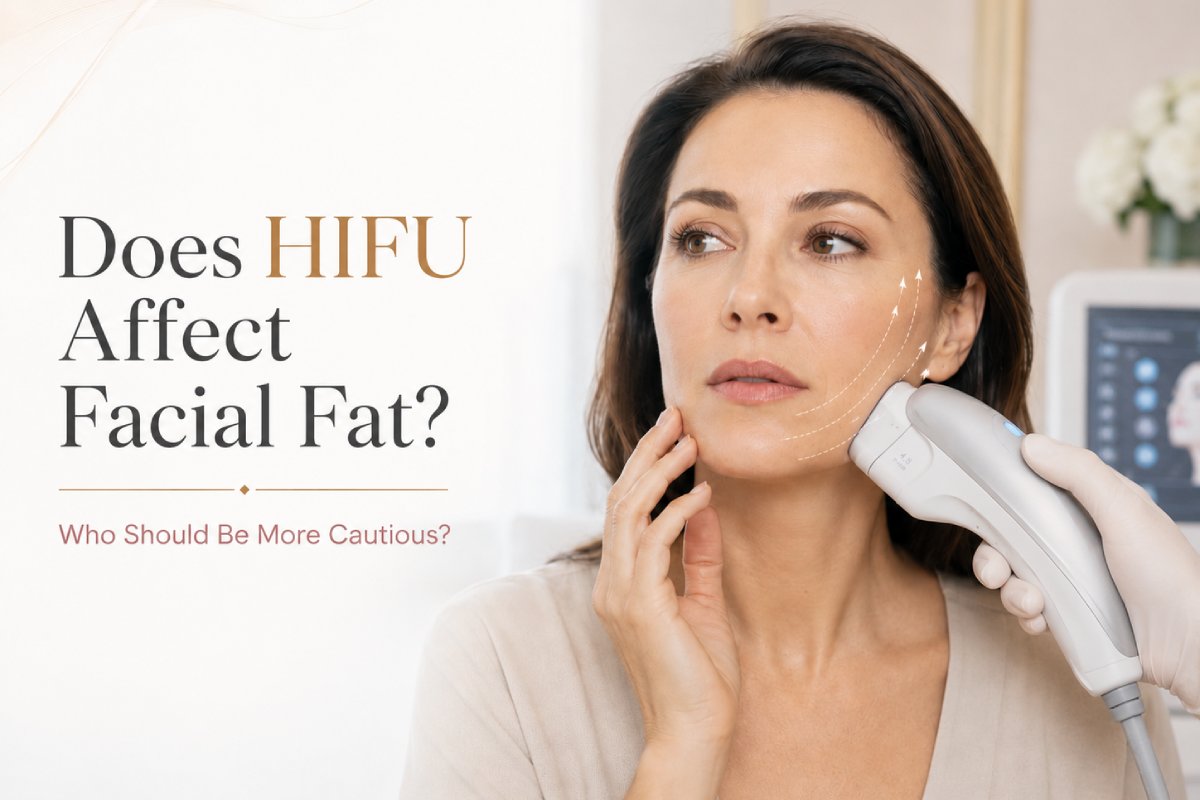
Does HIFU Affect Facial Fat? Who Should Be More Cautious?
Hits: 264
HIFU may make the face look tighter, but tighter does not always mean younger or more balanced.
For someone with early jowls or mild looseness beneath the chin, focused ultrasound may help create a cleaner jawline. However, for someone who already has hollow cheeks, visible temples, or limited facial fat, an overly aggressive treatment may make the face appear thinner or more tired.
That is why the question “Can HIFU reduce facial fat?” requires a careful answer.
The outcome depends on your facial anatomy, the area being treated, the device used, treatment depth, energy settings, and the practitioner’s understanding of facial structure.
Quick Answer: Can HIFU Reduce Facial Fat?
HIFU may affect facial fat or visible volume in certain circumstances, especially when ultrasound energy reaches a thin or volume-sensitive area.
However, fat reduction is not intended to be the main goal of facial HIFU performed for skin tightening.
Focused ultrasound creates small points of controlled heat beneath the skin. The intended response is collagen contraction and gradual collagen remodelling. Over time, this may improve mild skin laxity and provide better support to the treated area.
Unwanted facial hollowing is not considered a routine result. Still, volume changes may occur when treatment is too aggressive, poorly targeted, repeated unnecessarily, or unsuitable for the patient’s anatomy.
The term HIFU is widely used by patients and clinics. However, many clinical facial lifting treatments use microfocused ultrasound technology, sometimes with visualization. These devices are not identical to every machine marketed as HIFU.
Not Every HIFU Treatment Is the Same
HIFU stands for high-intensity focused ultrasound, but the term is used for different devices and treatment purposes.
Some ultrasound systems are designed for body contouring or intentional fat reduction. Facial lifting systems usually use different depths, cartridges, energy patterns, and treatment protocols.
This distinction matters because a treatment intended to tighten facial tissue should not be approached in the same way as a body treatment intended to reduce fat.
Some advanced facial ultrasound systems provide real-time visualization. This allows the practitioner to view tissue layers beneath the skin and confirm contact and depth before delivering energy.
Visualization may improve treatment accuracy, but technology alone does not guarantee a good result. Safe treatment still depends on patient selection, facial assessment, conservative planning, and practitioner experience.
How Does HIFU Tighten the Face?
Focused ultrasound delivers energy to selected layers beneath the skin without cutting or removing the skin’s surface.
The energy creates tiny points of heat in the targeted tissue. This encourages existing collagen fibres to contract and stimulates a gradual healing and remodelling response.
Over the following weeks and months, HIFU may improve concerns such as:
- Early jowling
- Mild jawline softness
- lose tissue beneath the chin
- Mild neck laxity
- Early brow descent
- Mild loss of definition in the lower face
Results tend to appear gradually and are usually more subtle than surgical lifting.
HIFU also has important limitations. It cannot replace missing cheek volume, rebuild bone support, remove a large amount of loose skin, or reposition deeper facial tissues in the same way as a facelift.
If the main concern is mild laxity, tightening may help. If the main concern is facial deflation or hollowing, tightening alone may not address the underlying problem.
Does HIFU Melt Facial Fat?
“Melt” is not an accurate description of a standard facial tightening treatment.
After HIFU, the face may appear slimmer because the jawline looks more defined or loose tissue beneath the chin has tightened. Existing hollows may also become more noticeable when the surrounding tissue changes.
In certain situations, energy may reach a fat-containing layer and contribute to a genuine volume change. This is more concerning in areas where the fat layer is already thin or plays an important role in maintaining facial balance.
However, a thinner-looking face does not automatically prove that facial fat has been destroyed.
Facial fullness may also change because of:
- Normal ageing
- Weight loss
- Reduced swelling after treatment
- Changes in lighting or photography
- Existing facial asymmetry
- Natural changes in skin and soft tissue
Before assuming that fat loss has occurred, the practitioner should compare standardized photographs, review the treatment record, and assess how the face has changed over time.
How Common Is Facial Fat Loss After HIFU?
There is no single percentage that accurately applies to every device, clinic, treatment protocol, and patient.
Clinical reviews generally describe redness, swelling, tenderness, bruising, tingling, and treatment discomfort as more common reactions. These effects are usually temporary and improve gradually.
Unwanted volume loss, asymmetry, burns, scarring, or nerve-related symptoms appear to be less common. However, uncommon complications are difficult to measure because devices, settings, practitioner experience, and reporting methods vary.
Reports of facial hollowing do not always prove that HIFU was the only cause. Weight changes, ageing, previous treatments, and existing facial anatomy may also affect the result.
The practical conclusion is that facial fat loss is not expected after every treatment, but the possibility should be taken seriously, particularly in thin or volume-sensitive faces.
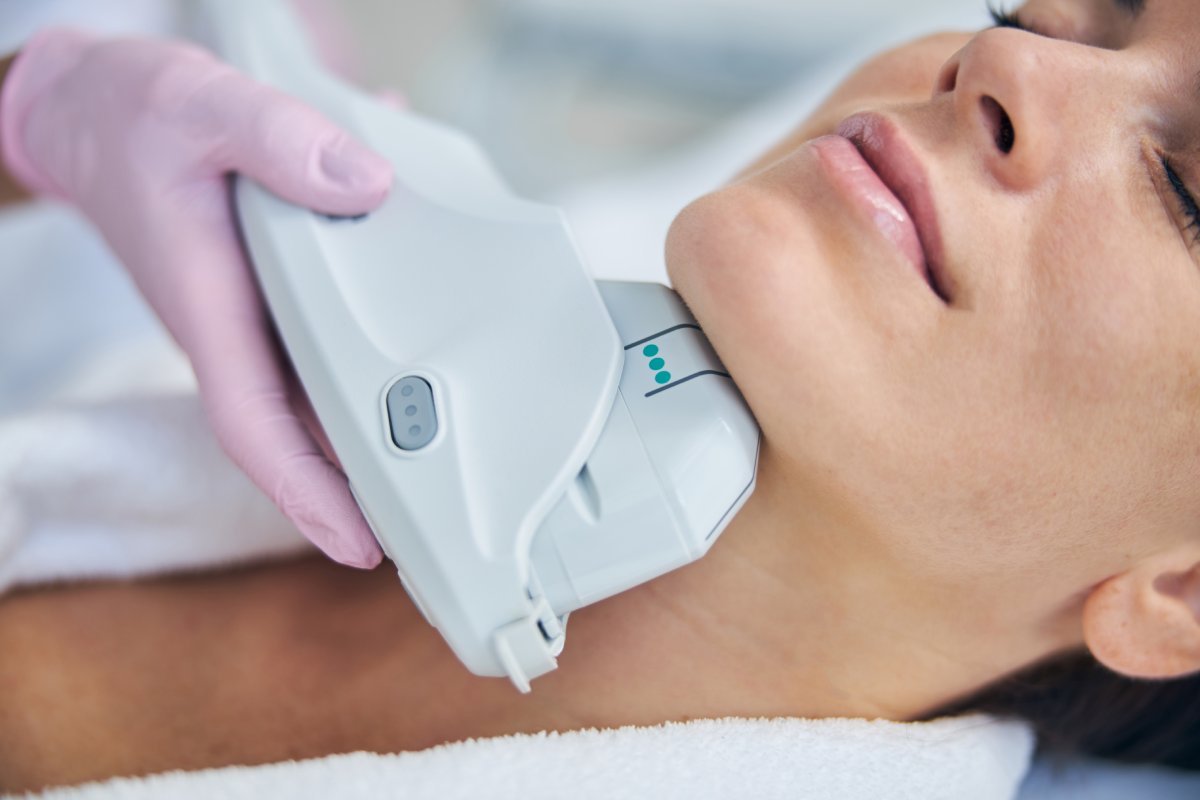
Who Should Be More Cautious?
People With Naturally Thin Faces
A lean face has less soft tissue available to tolerate unwanted volume changes.
Even a small change may make the cheeks, temples, or under-eye area appear noticeably hollower. Treatment may need to be selective, conservative, or avoided in certain areas.
A slim face is not automatically unsuitable for HIFU, but it requires more careful planning.
People With Existing Facial Hollowing
HIFU tightens tissue. It does not replace missing volume.
If your main concerns include sunken temples, flat cheeks, deep under-eye shadows, or facial deflation, the practitioner should first identify the cause.
Possible causes include fat loss, tissue descent, reduced bone support, skin laxity, or a combination of several factors.
Treating volume loss as though it were only loose skin may produce an unbalanced result.
Older Patients with Significant Volume Loss
Facial ageing affects the skin, fat compartments, ligaments, muscles, and underlying bone.
HIFU may improve one part of the ageing process by stimulating collagen, but it cannot restore every structural change.
Someone with advanced laxity or significant facial deflation may need a combined approach. In some cases, a surgical opinion may be more appropriate.
People Who Are Actively Losing Weight
Ongoing weight loss can change the cheeks, temples, jawline, and lower face.
When facial shape is still changing, it may be difficult to determine how much of the concern is caused by loose skin and how much is caused by reduced volume.
Waiting until weight and facial contours are more stable may allow for more accurate treatment planning.
People Who Have Had Several HIFU Sessions
More treatment does not automatically create a better result.
Before repeating HIFU, the practitioner should review the previous treatment areas, device, depths, settings, number of lines, response, and any new hollowing, numbness, weakness, pain, or asymmetry.
Repeating treatment without reviewing the previous result may expose the same tissue unnecessarily.
People With Filler in the Treatment Area
Previous filler may affect the timing and mapping of HIFU.
The practitioner should know where the filler was placed, what type was used, when it was injected, and whether it is still present.
Some ultrasound systems have not been fully evaluated for treatment directly over dermal filler. For this reason, filler history should always be discussed during the consultation.
Not Sure Whether HIFU Is Suitable for Your Face?
Facial anatomy is different for every person. If you have a slim face, existing hollowing, previous fillers, or concerns about facial volume, a personalized assessment can help determine whether HIFU is appropriate and which areas should be protected.
Which Facial Areas Need Extra Care?
Certain parts of the face require particular caution because they contain thin tissue, limited fat, prominent bone, or important nerves.
Temples
The temples naturally lose volume with age. Additional hollowing may make the face look older or more skeletal.
In some patients, the temples may be better left untreated.
Under-Eye Area
The under-eye area is anatomically delicate and sensitive to small changes in volume.
Energy should not be directed into the eyes, eyelids, or inside the orbital rim. Under-eye concerns may also result from pigmentation, volume loss, thin skin, or structural shadows rather than laxity alone.
Mid-Cheeks
The mid-cheek plays an important role in facial support and youthful contour.
Overtreatment may make existing cheek hollowing more visible. Before treating this area, the practitioner should distinguish between loose tissue and reduced volume.
Areas Over Prominent Bone
Thin tissue over the forehead, cheekbone, and jaw may require adjusted depth, careful contact, or lower energy.
The same settings should not be used across the entire face because tissue thickness varies considerably between areas.
When Can HIFU Be a Reasonable Choice?
HIFU may be suitable when mild to moderate skin laxity is the main concern and the face still has adequate volume.
Potentially suitable concerns include early jowls, mild jawline softness, loose tissue beneath the chin, mild neck laxity, and early brow descent.
The patient should understand that results are gradual and usually subtler than surgery.
HIFU should not be presented as a replacement for a facelift, nor should it be expected to restore missing cheek or temple volume.
A good treatment plan focuses on improving support while protecting areas where natural volume is important.
How Can the Risk Be Reduced?
The consultation should begin with diagnosis, not with choosing a package or a predetermined number of treatment lines.
Identify the Cause of the Concern
The practitioner should determine whether the appearance is mainly caused by loose skin, reduced facial fat, tissue descent, weak structural support, muscle movement, bone changes, or a combination of these factors.
Two people may both complain about jowls but require very different treatment plans.
Map Full and Hollow Areas
Areas of natural fullness and existing hollowing should be identified before treatment.
Previous fillers, facial asymmetry, prominent bones, thin tissue, previous HIFU sessions, and areas that should be avoided must also be considered.
Match Depth to Anatomy
The deepest cartridge is not automatically the best choice.
Treatment depth should depend on the thickness and anatomy of the target area. A depth that may be suitable beneath the chin may not be appropriate for the upper cheek or temple.
Use Conservative Settings
Higher energy does not guarantee a stronger or more attractive lift.
Excessive energy may increase discomfort and tissue exposure without producing a more balanced result. Settings should be adjusted according to the patient’s anatomy and treatment goals.
Take Standardized Photographs
Before-treatment photographs help document existing asymmetry, hollowing, and facial proportions.
They also provide a more reliable way to assess whether a later change is related to treatment, weight loss, ageing, or another factor.
What Should You Ask Before Booking HIFU?
A good consultation should leave you informed rather than pressured.
Consider asking:
- Is my concern mainly laxity, volume loss, or both?
- Which areas would you treat and avoid?
- What is the exact name of the device?
- Is it intended for facial lifting?
- Does it provide ultrasound visualization?
- Which treatment depths are being considered?
- How does my facial thickness affect the plan?
- Do my previous fillers change the treatment?
- What side effects should I expect?
- Which symptoms should I report immediately?
- What would you recommend if HIFU is not suitable for me?
A responsible practitioner should be able to explain both where treatment may help and where treatment should not be performed.
Additional resources
- HIFU Facial Price in Toronto 2026 + What Actually Affects the Cost?
- HIFU Before or After Fillers? The Right Order Matters
- Frequently Asked Questions About HIFU Therapy
- Which Whitby Clinic Uses HIFU, Microneedling, and PRP-all Under One Roof?
What Should You Do If Your Face Looks Hollow After HIFU?
Do not rush into another HIFU session or another energy-based procedure.
Contact the treating clinic and request information about the device, areas treated, cartridge depths, settings, number of lines, treatment date, and before-treatment photographs.
Arrange an in-person assessment if hollowing is increasing or accompanied by persistent numbness, weakness, asymmetry, burns, severe pain, or changes in facial movement.
Additional energy-based treatment should be paused until the cause is clearer.
Filler may sometimes restore support, but it is not an automatic solution. The timing, location, and cause of the volume change should be assessed first.
Persistent weakness, speech difficulty, vision changes, or severe neurological symptoms require prompt medical assessment.
Is RF Microneedling Automatically Safer?
No treatment is automatically safer simply because it uses a different type of energy.
HIFU and RF microneedling work differently, but both require suitable patient selection, accurate depth, appropriate settings, a reliable device, and an experienced practitioner.
The safest option depends on your anatomy, treatment history, skin concerns, and the area being treated.
Does Your Face Need Tightening or Volume Support?
The right treatment begins with understanding whether your concern is caused by skin laxity, volume loss, or a combination of both.
A personalized consultation at Amazing New Face can help identify which areas may benefit from treatment and which areas should be protected. Appointments are available at our Thornhill and Whitby clinics.
Frequently Asked Questions
Can HIFU Make My Cheeks Hollow?
It is possible, particularly when a naturally thin cheek receives excessive or poorly targeted energy. However, hollowing is not expected after every treatment.
Is HIFU Safe for a Slim Face?
A slim face is not automatically unsuitable, but it often requires a more selective and conservative plan. Existing hollow areas may need to be avoided.
Does Stronger HIFU Give Better Results?
Not necessarily. Accurate targeting, appropriate depth, and patient selection are more important than maximum energy.
How Often Should Facial HIFU Be Repeated?
There is no universal schedule. Repeat treatment should depend on anatomy, previous response, device guidance, and whether meaningful laxity has returned.
Can Facial Fat Grow Back?
Not every hollow represents permanent fat loss. Weight changes, swelling, lighting, and ageing can affect facial fullness. If actual fat cells have been significantly injured, volume may not return predictably.
The Bottom Line
HIFU may be useful when mild to moderate laxity is the main concern and treatment is carefully planned.
However, the face is not simply a layer of loose skin. It is a complex structure made of skin, fat, ligaments, muscles, nerves, and bone.
Tightening one layer without considering the others can change facial balance.
People with naturally thin faces, existing hollowing, significant volume loss, active weight loss, repeated HIFU treatments, or filler in the treatment area should be more cautious.
The safest plan is not based on how much energy can be delivered. It is based on understanding where tightening may improve support and where facial volume should be protected.
About Amazing New Face
At Amazing New Face, we help clients make informed and confident decisions about non-surgical facial rejuvenation through honest guidance, personalized treatment planning, and a strong focus on natural facial balance.
Treatments are led by Dr. Alireza Hashemnejad, a graduate of Tehran University of Medical Sciences with more than 20 years of experience in cosmetic and non-surgical aesthetic procedures, including HIFU, Botox, dermal fillers, PRP, RF microneedling, skin boosters, and facial rejuvenation treatments.
If you are considering HIFU, our team can assess whether your concern is primarily related to skin laxity, facial volume loss, or a combination of both. We can also help identify which areas may benefit from tightening and which areas should be treated conservatively or protected to maintain facial harmony.
With clinic locations in Thornhill and Whitby, we serve clients throughout Toronto and the GTA, including Richmond Hill, North York, Markham, Vaughan, Pickering, Ajax, and surrounding areas.
Not ready to visit the clinic yet? You can
Book a consultation with Amazing New Face to find out whether HIFU is suitable for your facial structure, skin concerns, and treatment goals.
