
Amazing New Face Blog
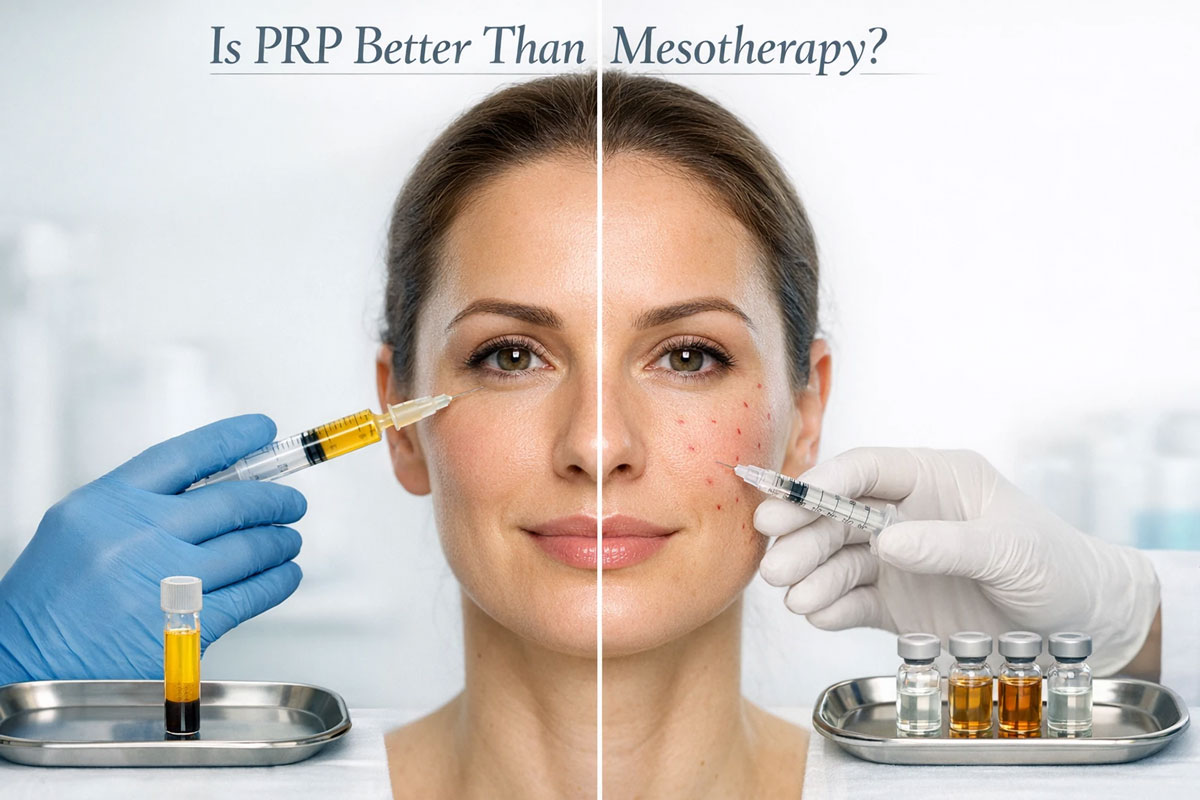
Is PRP Better Than Mesotherapy?
Hits: 256
If you’ve been exploring rejuvenating skin treatments lately, you’ve probably seen two big players showing up everywhere: PRP (Platelet‑Rich Plasma) and Mesotherapy. Both promise glowing, refreshed, plumper skin… but in very different ways. And if you’ve ever wondered “Okay, but which one is actually better?” you’re definitely not alone.
Here’s the honest truth: one isn’t universally “better” than the other.
But one might be better for you, your goals, your skin type, and even your comfort level.
This guide will walk you through the differences in simple, friendly language so you can make a confident, educated choice. No hype. No pressure. Just clarity.
What’s the Quick Answer: Is PRP Better Than Mesotherapy?
PRP is better for:
- improving skin quality from within
- boosting collagen naturally
- under‑eye rejuvenation
- long‑term texture and firmness
- people who prefer treatments using their own biology
Mesotherapy is better for:
- fast hydration and glow
- brightening skin tone
- treating dryness, dullness, or crepey skin
- customizable ingredient blends
- people who want quick, visible radiance
Think of it like this:
PRP works like planting seeds to grow a healthier garden.
Mesotherapy works like watering and feeding the plants you have right now.
Some people even combine both, but more on that later.
What Exactly Is PRP? (In Simple, non‑Scary Terms)
PRP stands for Platelet‑Rich Plasma, and here’s the part that surprises people, it comes from your own blood.
But don’t worry. It’s not nearly as dramatic as it sounds.
Here’s how it works:
- A small sample of blood is drawn (just like a routine test).
- The sample is spun in a centrifuge.
- This separates the golden, concentrated plasma, the part rich in growth factors.
- That plasma gets injected or microneedled into your skin.
Why this matters:
PRP contains natural signals your body uses to repair, strengthen, and rejuvenate tissue.
It’s like delivering a little “wake up and glow” message to your skin cells.
How PRP Helps:
- Boosts collagen
- Smooths fine lines
- Softens texture
- Reduces crepiness
- Improves under‑eye hollows and darkness
- Enhances skin firmness
Many see results over several weeks as collagen builds, not overnight, but long‑lasting and natural.
What Is Mesotherapy? (The Hydration Hero)
Mesotherapy is a technique where ultra‑fine injections deliver a customized blend of skin‑loving ingredients directly into the superficial layers of the skin.
Ingredients might include:
- Hyaluronic acid
- Vitamins (like A, C, E, B5)
- Amino acids
- Peptides
- Antioxidants
- Minerals
- Brightening agents
Think of it as a cocktail of nourishment delivered exactly where your skin needs it most.
How Mesotherapy Helps:
- Deep hydration
- Fresher, dewy glow
- Smoother micro‑texture
- Brighter skin tone
- Plumper, healthier surface
- Improvement in fine superficial lines
Results are quicker than PRP, many people leave looking more radiant right away.
PRP vs. Mesotherapy: What’s the Core Difference?
Here’s the simplest way to understand it:
PRP = Regeneration
Your body heals and rebuilds from within.
Mesotherapy = Nourishment
Your skin receives targeted ingredients it may be lacking.
PRP works “inside out.”
Mesotherapy works “outside in.”
Both improve skin, but they do so very differently.
Which One Gives Faster Results?
If you’re preparing for a special event or want an immediate glow:
Mesotherapy usually gives faster visible results.
Skin looks:
- more hydrated
- brighter
- softer
- plump
often within days.
PRP, on the other hand:
- stimulates slow, steady improvement
- builds collagen
- improves tone and texture gradually
Most people see full results around 4–12 weeks.
Think:
PRP = slow burn, long-term payoff
Mesotherapy = instant refresh, gradual improvement
Which One Lasts Longer?
If durability matters:
PRP generally lasts longer because the skin itself improves at a structural level.
Results often last:
- 6–12 months, sometimes longer
Mesotherapy is more temporary, depending on ingredients:
- often 4–8 weeks of visible hydration
- requires maintenance for ongoing glow
Neither is permanent, but PRP typically has the longer “skin memory.”
Which One Is Better for Under‑Eyes?
Great question, and one many people ask.
PRP is usually the better choice for under‑eyes because:
- the skin is thin
- the area needs collagen support
- PRP reduces darkness, hollows, and crepiness
- it’s gentle because it uses your own plasma
Mesotherapy can hydrate the area, but PRP tends to outperform it in the long run.
If under‑eyes are your main concern, PRP wins.
Which One Is Better for Anti‑Aging?
It depends on what “anti‑aging” means to you.
If you want:
- firmer skin
- smoother texture
- natural collagen
- long-term improvement
PRP is generally better.
If anti-aging for you means:
- more glow
- better hydration
- improved tone
- fine-line smoothing
Mesotherapy shines here.
Most aging skin actually benefits from both, but alternating sessions is usually plenty.
Which One Hurts More? (Let’s Be Real)
Neither is considered very painful, but here’s the comparison:
PRP:
- feels like microneedling or small injections
- slight pressure under the eyes
- numbing cream is usually enough
Mesotherapy:
- involves multiple tiny injections
- can feel like light pinching or pricking
- also uses numbing
If you are needle‑sensitive, mesotherapy may feel more noticeable simply because there are more injection points.
But both are very manageable and well-tolerated.
What Are the Side Effects?
Both treatments are considered low‑risk when performed by medical professionals.
With PRP:
- mild redness
- puffiness
- small bruises
These typically fade within 1–3 days.
With Mesotherapy:
- pinpoint redness
- small bumps at injection sites
- possible mild swelling
These usually settle in a few hours to 24 hours.
Because PRP uses your own plasma, allergic reactions are extremely rare.
Mesotherapy, however, uses external ingredients, so mild sensitivity can happen, though it’s uncommon.
If you’re unsure how your skin might react or which option is truly right for you, a quick conversation with a professional can give you clarity fast.
Feel free to contact our clinic for a friendly, no‑pressure consultation, we’re here to walk you through your options and help you make the choice that feels right for your skin.
Which One Is More Natural?
If “natural” is your priority:
PRP is the purest option.
It’s literally you. No additives. No synthetics.
Mesotherapy involves a blend of lab‑formulated ingredients, so while safe and effective, it’s not “all natural.”
Which One Is Better for Acne Scars?
Acne scars are a collagen issue, so the winner is:
PRP, especially when combined with microneedling.
It:
- remodels scar tissue
- boosts collagen
- smooths texture over time
Mesotherapy won’t hurt scars, but it won’t correct them deeply.
Which One Is Better for Overall Glow?
If you want that fresh, dewy, “I drink two litres of water a day” skin:
Mesotherapy usually gives a quicker glow.
Its vitamin and hyaluronic acid blends brighten and hydrate the surface beautifully.
PRP also improves glow, but it’s slower and more subtle.
Which One Is Better for Crepey or Thin Skin?
Thin, crepey skin, especially around the eyes or lower face, responds best to:
PRP.
Because PRP builds collagen, it strengthens fragile tissue over time.
Mesotherapy hydrates crepey skin but doesn’t rebuild it.
Can You Combine PRP and Mesotherapy?
Absolutely, and some people get the best results by combining the two.
This approach is called a layered rejuvenation strategy, and it works like this:
- PRP boosts collagen and supports deeper structures
- Mesotherapy hydrates and brightens the surface
Together, they target BOTH the foundation and the finish.
Many clinics alternate:
- PRP one month
- Mesotherapy the next
This rhythm gives you collagen + glow without overwhelming the skin.
Who Should Choose PRP? A Simple Checklist
Choose PRP if you want:
- natural collagen stimulation
- improvement in lines or wrinkles
- better under‑eye skin
- long-term structural improvement
- reduced crepiness or thinning
- gradual, natural‑looking results
- help with acne scars
Ideal for anyone wanting deeper, regenerative results.
Who Should Choose Mesotherapy? A Simple Checklist
Choose mesotherapy if you want:
- fast hydration
- a brighter, more even tone
- fresher glow
- nutrient infusion
- help with dryness
- surface‑level rejuvenation
- gentle, subtle improvements
Great for events, seasonal refreshes, or maintaining skin health.
Which Treatment Is Better for Different Age Groups?
Age isn’t everything, but it does shape what your skin needs.
20s:
Mesotherapy often works beautifully for hydration and prevention.
PRP is useful for acne scars.
30s:
A mix is ideal.
PRP starts to shine for collagen support.
Mesotherapy boosts glow.
40s and 50s+:
PRP becomes more valuable for firmness and texture.
Mesotherapy complements it with hydration.
60s+:
PRP can noticeably improve thin, fragile skin.
Mesotherapy adds radiance and comfort.
Is PRP or Mesotherapy Better for Dry Skin?
If dryness is your main issue:
Mesotherapy is usually more effective and immediate.
Hyaluronic acid and vitamins restore moisture quickly.
PRP helps indirectly by improving skin health, but it’s not a moisture infusion.
Is PRP or Mesotherapy Better for Dull Skin?
Dull skin typically needs brightening and hydration.
So, the first winner is:
Mesotherapy for fast radiance.
Over time, PRP also improves glow, but it’s not the “instant refresh” treatment.
How Many Sessions Do You Need?
PRP:
Typically, 3 sessions spaced 4–6 weeks apart
Maintenance: 1–2 times per year
Mesotherapy:
Usually 3–6 sessions every 2–4 weeks
Maintenance: every 1–3 months depending on ingredients
How Much Downtime Does Each Have?
PRP:
1–3 days of mild swelling or redness
Mesotherapy:
A few hours to 1 day of pinpoint redness
Mesotherapy is usually the gentler option if you need same‑day or next‑day social plans.
Can Either Treat Pigmentation?
Yes, but in different ways.
PRP can:
- reduce inflammation
- improve pigmentation by enhancing skin health
But it’s not a primary pigmentation treatment.
Mesotherapy can:
- include brightening ingredients (like vitamin C or glutathione)
- improve overall skin tone
- support more even coloration
For pigmentation specifically, mesotherapy edges ahead, but neither replaces laser or specialized pigmentation therapies.
Cost Comparison: Is PRP More Expensive?
Typically, yes.
PRP is often pricier because:
- it involves medical‑grade processing
- requires specialized equipment
- uses your own biological material
Mesotherapy is usually more affordable per session.
But prices vary widely by region, provider, and formula.
Which One Feels More “Worth It”?
This is subjective, so here are the patterns most people share:
PRP feels worth it when:
- you want deeper change
- you’re ready for gradual but noticeable improvement
- you prefer natural treatments
- you value long-term results
Mesotherapy feels worth it when:
- you love glowing skin
- you want a quick refresh
- you prefer gentle treatments
- you enjoy regular self-care sessions
Some people love the long-term payoff of PRP.
Others adore the instant gratification of mesotherapy.
Both have strong fans, for good reasons.
Additional resources
- PRP vs Microneedling for Facial Skin: Which Treatment Is Better?
- PRP or Botox? Treating the Cause or Controlling Muscle Movement?
- Cost of Mesotherapy for Abdominal Slimming: What You’re Really Paying For (and What You’re Not)
- Which Whitby Clinic Uses HIFU, Microneedling, and PRP-all Under One Roof?
A Helpful Way to Choose: What’s Your Skin Priority?
Match your main goal with the right treatment:
- Glow → Mesotherapy
- Firmness → PRP
- Hydration → Mesotherapy
- Fine lines → PRP or Mesotherapy (depends on depth)
- Collagen → PRP
- Acne scars → PRP
- Dryness → Mesotherapy
- Dullness → Mesotherapy
- Under-eye improvement → PRP
- Crepey texture → PRP
- Event-prep glow → Mesotherapy
Every skin has its own story, and the best care approach can be different for everyone.
To find the safest and most effective option for you, get in touch with us. Our expert team is ready to help you choose the path that truly makes your skin radiant and healthy through a simple, friendly consultation.
We look forward to hearing from you!
Is One Safer Than the Other?
Both are considered safe when performed by trained professionals.
PRP is especially safe because it’s your own blood, no synthetic ingredients.
Mesotherapy is also safe, but because it uses blended formulas, mild sensitivities are possible (though unusual).
A Simple Rule of Thumb: Inside vs. Outside
If you want your skin structure to improve → PRP.
If you want your skin surface to glow → Mesotherapy.
Some want both.
Some only need one.
Both can be right.
Why the Choice Doesn’t Need to Feel Overwhelming
Many people feel pressured to pick “the best” treatment, as if one is universally superior. But skin health doesn’t work like that.
PRP and mesotherapy don’t compete.
They complement.
You’re not choosing between good and bad.
You’re choosing between:
- long-term rejuvenation
- immediate radiance
- or a thoughtful plan combining both
Once you understand how they work, the decision becomes much easier.
Final Answer: Is PRP Better or Is Mesotherapy Better?
Neither is universally better; they simply do different jobs.
- PRP = deeper, structural rejuvenation
- Mesotherapy = surface hydration and glow
If you want natural collagen, long-term improvement, or under‑eye rejuvenation → PRP.
If you want brightness, hydration, and fast glow → Mesotherapy.
And if you want the most complete rejuvenation, many people (and providers) blend the two-over time.
You’re not choosing a winner; you’re choosing what’s right for you.
Why Choose Amazing New Face?
At Amazing New Face, we believe that beauty should be empowering, not stressful or overwhelming. Our approach is straightforward: every treatment is designed to help you feel confident, comfortable, and true to yourself.
From the moment you walk through our doors, you'll be welcomed by a warm and attentive team who listens to your concerns, understands your goals, and creates a personalized treatment plan just for you.
Our clinic is led by Alireza Hashemnejad, a skilled aesthetic specialist with over 20 years of experience. A graduate of Tehran University of Medical Sciences and a board member of the Canadian Academy of Facial Esthetics, Alireza is known for his precision, artistry, and gentle touch in advanced treatments like Botox, dermal fillers, PRP therapy, and HIFU.
With modern, welcoming clinics in Thornhill and Whitby, we proudly serve women across the GTA, including North York, Richmond Hill, Markham, Pickering, Ajax, and beyond. Whether you're experiencing your first treatment or maintaining long-term results, you can always expect honest guidance, expert care, and naturally beautiful outcomes.
Our Services
- Dermal Fillers – Restore volume, enhance facial contours, and smooth fine lines
• Botox Injections – Relax wrinkles and refresh your natural expression
• HIFU Facial Treatments – Lift and tighten your skin without surgery
• PRP Therapy – Rejuvenate your skin by using your own plasma to boost collagen
• RF Microneedling – Improve skin tone, texture, and firmness
• Skin Boosters – Deeply hydrate and brighten dull, tired skin
• Hair Regrowth Mesotherapy – Promote fuller, healthier hair growth
• Fat-Dissolving Injections – Target stubborn areas with minimal downtime
• Non-Surgical Facelifts – Achieve a youthful lift without invasive surgery
• Personalized Consultations – One-on-one expert recommendations tailored to your needs
Start Your Journey from Home
Starting your transformation has never been easier.
Whether you're considering a non-surgical facelift in Whitby, seeking skin rejuvenation in Thornhill, or just looking for trusted professional advice, Amazing New Face is here to guide you every step of the way with care and expertise.
