
Amazing New Face Blog

Can PDRN Improve Crepey Under-Eye Skin Without Adding Volume?
Hits: 247
Fine lines, dryness, or a thin, crumpled texture under the eyes may become more noticeable when you smile or apply concealer. This is often called crepey under-eye skin.
If you do not have a deep hollow, and do not want filler, you may be considering PDRN under-eye treatment or polynucleotide injections. These treatments are designed to improve skin quality rather than dramatically change facial shape.
So, can PDRN improve crepey under-eye skin without adding volume?
Simple Answer
It may help in the right person.
PDRN and polynucleotide treatments may improve hydration, fine lines, elasticity, and the texture of thin under-eye skin. Their main purpose is usually to improve the skin rather than fill a deep hollow.
However, PDRN is not suitable for every under-eye concern. It is unlikely to correct prominent eye bags, a deep tear trough, significant loose skin, chronic puffiness, or every type of dark circle.
What Is Crepey Under-Eye Skin?
Crepey skin looks thin and finely wrinkled, a little like tissue paper. It may appear dry, less smooth, or more crumpled when the face moves. Makeup may collect in the lines or sit unevenly over the area.
The skin around the eyes is naturally delicate. With age, sun exposure, repeated movement, dryness, smoking, genetics, and hormonal changes, it may lose hydration and elasticity.
Crepiness is not the same as a tear trough or an eye bag. A tear trough is a hollow beneath the eye. An under-eye bag is fullness related to fat pads, loose skin, or fluid.
Crepey skin is mainly a skin-quality concern, although several problems can exist at the same time.
What Is PDRN?
PDRN stands for polydeoxyribonucleotide. It is made from purified DNA-derived fragments, commonly obtained from salmon or trout. It is often discussed alongside polynucleotides, also called PN.
PDRN and PN are related, but products can differ in concentration, ingredients, texture, and whether they contain hyaluronic acid.
The practical point is simple: not every product marketed as “PDRN,” “PN,” or “salmon DNA” behaves in exactly the same way. Before treatment, ask for the exact product name, what it contains, and whether it is suitable for use around the eyes.
How May PDRN Help Crepey Under-Eye Skin?
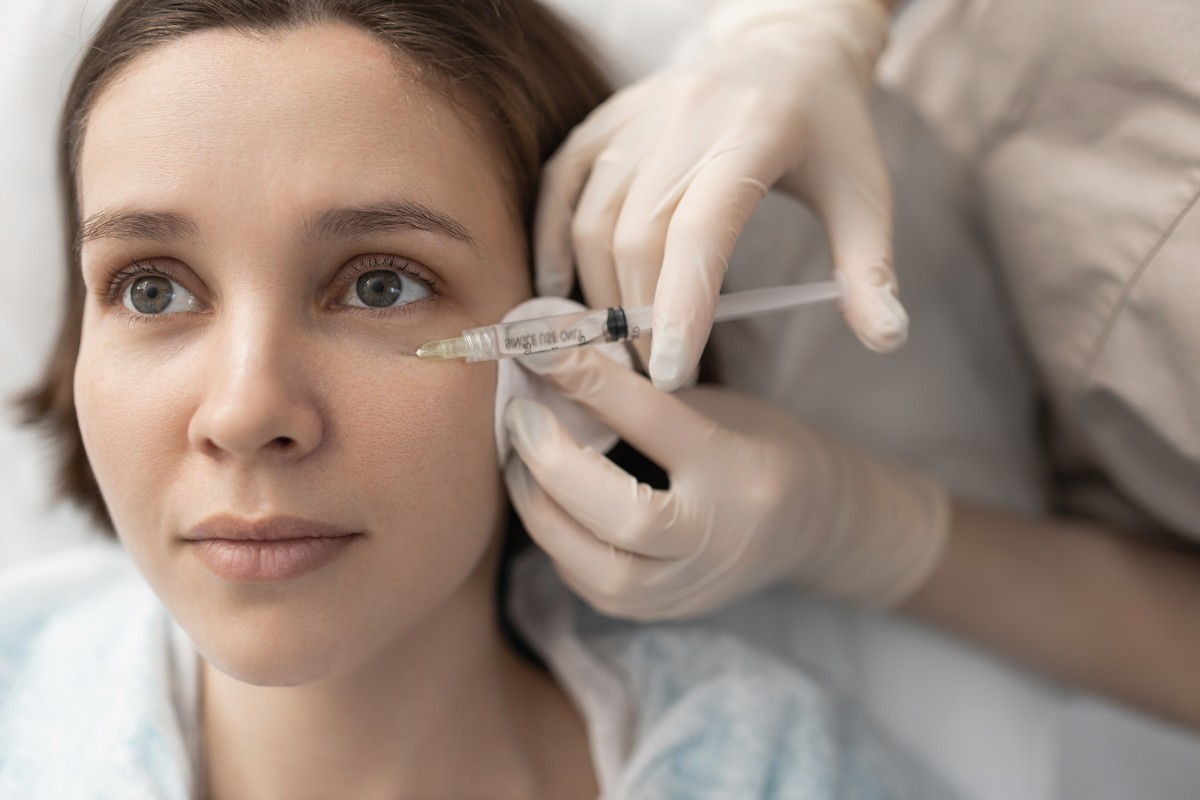
PDRN and polynucleotide injections are generally used as skin-quality treatments. Instead of placing a firm gel beneath the skin to replace volume, the goal is to support gradual improvement in the skin’s appearance.
Possible benefits include better hydration, softer fine lines, improved texture, and a slightly firmer look.
Dry under-eye skin can look more lined and papery. Better hydration may help the skin reflect light more evenly and appear smoother.
PDRN will not erase every wrinkle, but mild superficial lines may look softer when the skin becomes better hydrated and more resilient.
Crepey skin also folds easily and may not bounce back as well as it once did. Polynucleotide treatment may help the area look smoother and slightly firmer over time.
Results are usually gradual rather than immediate. This may appeal to people who want a fresher appearance without an obvious change in facial shape.
Research suggests that polynucleotide treatments may improve skin texture, hydration, elasticity, and fine lines. However, studies are still limited and have used different products and treatment plans.
A systematic review identified nine eligible studies involving 219 patients and rated the available evidence as low to moderate quality. A small split-face study also found improvements after both PN and non-cross-linked hyaluronic acid treatments around the eyes.
Does PDRN Add Volume Under the Eyes?
PDRN under-eye treatment is generally not intended to add structural volume in the same way as tear-trough filler.
Traditional hyaluronic acid filler is used to soften a hollow or improve the transition between the lower eyelid and cheek. PDRN and polynucleotides are usually chosen to improve skin quality.
Temporary injection bumps and swelling can still make the area look fuller for a short time. Some products also contain hyaluronic acid or have a thicker formulation, which may create mild plumping.
That is why the exact product matters more than the general name “PDRN.”
Who May Benefit Most?
PDRN or polynucleotide under-eye treatment may be worth discussing when the main concern is:
- Mild crepey under-eye skin
- Fine superficial lines
- Dry or thin-looking skin
- Early loss of elasticity
- Uneven skin texture
- A desire for subtle, gradual improvement
- A preference to avoid traditional filler
The best candidates usually have a skin-quality problem, rather than a major structural problem beneath the eye.
Not Sure What Is Causing Your Under-Eye Concern?
Crepey skin, hollowing, puffiness, and dark circles may look similar, but they do not always require the same treatment.
What Will PDRN Not Fix?
A Deep Tear Trough
If the tired appearance is mainly caused by a deep hollow, improving the skin may not be enough. PDRN does not reliably replace missing structural support.
Prominent Bags or Chronic Puffiness
Eye bags may be related to fat pads, loose skin, or fluid retention. Injecting an already full or swollen area may temporarily make it look puffier.
People who regularly experience morning swelling, malar bags, or festoons should receive a careful assessment before having any under-eye injectable treatment.
Significant Loose Skin
PDRN may improve mild texture, but it cannot remove substantial excess skin. Other treatments or a surgical assessment may be more appropriate.
Every Type of Dark Circle
Dark circles can be caused by pigment, visible blood vessels, thin skin, allergies, rubbing, hollowness, or shadows from eye bags.
PDRN may help when thin skin contributes to the darkness, but it is not a universal dark-circle treatment.
PDRN vs. Under-Eye Filler
PDRN and filler are not interchangeable.
PDRN is more often considered for:
- Crepey under-eye texture
- Fine lines
- Dryness
- Mild loss of elasticity
- Gradual skin-quality improvement
Under-eye filler is more often considered for:
- A true tear-trough hollow
- Loss of structural support
- An uneven eyelid-to-cheek transition
- More immediate contour correction
Some people need neither treatment. In certain cases, improving cheek support may be more appropriate than injecting directly beneath the eyes.
The right option depends on the cause of the concern, not which treatment is currently more popular.
What Happens During Treatment?
A proper appointment should begin with an assessment of skin thickness, hollowing, eye bags, puffiness, pigmentation, cheek support, previous treatments, and existing filler.
After cleansing and, when appropriate, numbing, the product is usually placed through several small injections.
Tiny bumps, redness, bruising, or swelling may be visible temporarily. Treatment schedules vary, and many plans use an initial series followed by a review of the response.
There is no universal PDRN treatment plan that is suitable for everyone. The number of sessions should depend on the product, the condition of the skin, and how the area responds.
When Will You See Results?
PDRN is not an instant under-eye correction. When improvement occurs, it usually develops gradually over the following weeks.
You may notice:
- Smoother-looking skin
- Softer fine lines
- Less papery texture
- Easier makeup application
- A fresher, more hydrated appearance
Results are usually subtle. PDRN should not dramatically reshape the under-eye area.
How long the improvement lasts varies depending on the product, number of treatments, age, skin condition, sun exposure, skincare habits, and treatment technique.
Be cautious of anyone who promises an exact result or fixed duration before examining your skin.
PDRN Side Effects and Safety
Common short-term effects may include:
- Small injection bumps
- Redness
- Tenderness
- Bruising
- Swelling
- Itching
- Temporary unevenness
Available studies generally describe side effects as mild and temporary, but the overall evidence base remains limited.
Less common risks include infection, allergic reaction, persistent lumps, inflammation, or prolonged swelling. Treatment should be performed by a qualified medical professional familiar with facial anatomy and the product used.
Treatment may need to be postponed during pregnancy or breastfeeding, active infection, certain bleeding problems, uncontrolled illness, or a known ingredient allergy.
Because many products are derived from fish sources, mention any fish allergy during your consultation.
Health Canada advises people considering cosmetic injections to discuss the product, expected benefits, possible complications, warnings, and contraindications with a qualified health professional. Products used in cosmetic procedures may also be regulated differently depending on their intended purpose and classification.
Seek urgent medical attention after any facial injection if you develop severe pain, unusual whitening or mottling of the skin, visual changes, breathing difficulty, fever, drainage, or marked one-sided swelling.
Additional resources
- PRP vs Exosomes vs PDRN: Which Skin Rejuvenation Treatment Is Right for You?
- How Long Does Under-Eye Filler Last and When Does It Need to Be Repaired?
- PRP for Dark Circles and Puffiness Under the Eyes: Does It Really Work?
- Which Whitby Clinic Uses HIFU, Microneedling, and PRP-all Under One Roof?
Questions to Ask Before Treatment
Before agreeing to under-eye PDRN, ask:
- What is causing my under-eye concern?
- What exact product will you use?
- Does it contain hyaluronic acid?
- Is it suitable for the under-eye area?
- What results are realistic for me?
- What should I do if swelling lasts longer than expected?
A trustworthy consultation should clarify the problem, even when PDRN is not the best option.
Can Skincare Help Crepey Under-Eye Skin?
Skincare cannot replace an injectable treatment, but it can reduce dryness and help protect delicate under-eye skin.
Broad-spectrum sunscreen, sunglasses, a gentle moisturizer, and careful makeup removal may help. A suitable retinoid or retinal product may also be considered when recommended for your skin.
Avoid harsh scrubs and strong acids around the eyelids because irritation can make dryness and fine lines look worse.
The Bottom Line
PDRN or polynucleotide injections may help improve crepey under-eye skin without intentionally adding the structural volume associated with traditional filler.
They may be most helpful for mild fine lines, dryness, thin-looking skin, and early textural changes.
They are unlikely to correct deep tear troughs, prominent eye bags, chronic puffiness, significant loose skin, or every type of dark circle.
The evidence is promising but still developing. The exact product, treatment technique, and correct diagnosis all matter.
Instead of asking only:
“Does PDRN work?”
Ask:
“Is my under-eye concern the type of problem PDRN can realistically improve?”
About Amazing New Face
At Amazing New Face, we help clients make informed decisions about non-surgical facial rejuvenation through honest guidance, personalized planning, and a focus on natural facial balance.
Treatments are led by Dr. Alireza Hashemnejad, a graduate of Tehran University of Medical Sciences with more than 20 years of experience in aesthetic procedures.
With locations in Thornhill and Whitby, we serve clients throughout Toronto and the GTA.
A personalized assessment can help determine whether your concern is related to crepey skin, volume loss, puffiness, pigmentation, or a combination.
